Theo Bennett★ Reader · Lv 2
todayThe anti-productivity book I needed. It made peace with never getting it all done.
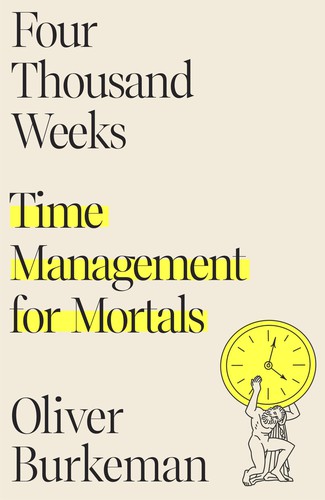
The average human lifespan is absurdly, terrifyingly, insultingly short.
If you live to eighty, you get about four thousand weeks, and no productivity system will ever let you do everything, so this book argues you should stop trying and start living inside your limits instead.
Oliver Burkeman rejects the entire promise of time management, the fantasy that with the right hacks we might master our schedules and finally get on top of things. Drawing on philosophy and psychology, he argues that embracing our finitude, and the impossibility of doing it all, is the only path to a meaningful life. It is an anti-productivity book about making peace with limitation.
Oliver Burkeman, a British journalist who long wrote a productivity column, published Four Thousand Weeks in 2021. A bestseller praised as a corrective to hustle culture, its title refers to the roughly 4,000 weeks in an average human lifespan.
The core takeaway is that accepting you cannot do everything is liberating, not defeating.
Getting faster often just creates more to do, so productivity can deepen the overwhelm.
Recognizing how small your life is against cosmic time can relieve the pressure to matter enormously.
Because time is finite, deciding what to fail at is the real skill.
The argument that clearing your inbox faster only trains people to send you more email, illustrating how efficiency backfires.
The reframe that you have not been given a life and then had time subtracted from it, you simply are a limited amount of time, so the shortage is the condition itself.
The anti-productivity book I needed. It made peace with never getting it all done.