

Theo Bennett★ Reader · Lv 2
todayO'Farrell turns a footnote of history into the most devastating novel about grief I've read.
A boy is coming down a flight of stairs.
In Stratford, a glovemaker's son marries a wild, uncanny woman who reads people like weather, and years later, while he is away in London, their only son falls ill with the plague, a death that will one day become the most famous play in the world.
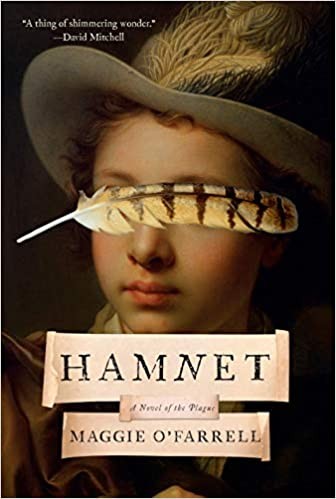
Maggie O'Farrell reimagines the life behind Shakespeare's family, centering not the famous playwright, who is never named, but his wife Agnes and their son Hamnet, who died at eleven. It is a novel about marriage, grief, and how unbearable loss might transmute into art. The play Hamlet hovers at the edges as the shape sorrow finally takes.
Maggie O'Farrell published Hamnet in 2020, and it won the Women's Prize for Fiction and the National Book Critics Circle Award. Praised for imaginatively filling the silence around Shakespeare's domestic life, it was later adapted for the stage by the Royal Shakespeare Company.
What awaits is Shakespeare's world seen entirely through the family he left behind.
The wife, usually a footnote, becomes a vivid, herb-wise, second-sighted heroine.
The novel renders a mother's and father's mourning with almost unbearable tactility.
The book traces how a son's death might become the name of a tragedy.
The chapter tracing the plague's journey to Stratford, following a single flea across seas and ships from a glassmaker in Venice to the twins' home.
Agnes discovering, at the end, that her husband has put their dead son's name upon a stage in London, and going to see the play.
O'Farrell turns a footnote of history into the most devastating novel about grief I've read.