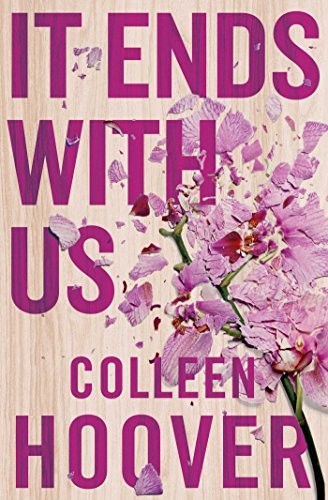
It Ends with Us
There is no such thing as bad people. We're all just people who sometimes do bad things.
Why read it
Lily Bloom's father — beloved town mayor, brutal husband — is freshly buried when she meets a neurosurgeon on a Boston rooftop and begins the love story she was owed. Then the first shove happens, and Hoover's romance turns into the book BookTok made a phenomenon: the anatomy of staying, told by someone who swore she never would.
The trap is sprung on the reader too: Ryle arrives as pure romance-novel hero, so when the violence starts, the reader has already made Lily's investment and must do Lily's math — the apologies, the good days, the 'it happened once.' Interleaved are Lily's teenage journals (addressed to Ellen DeGeneres) about Atlas, the homeless boy she loved and lost, and about watching her mother stay. The title is the thesis: cycles end when someone pays the full price of ending them, and Hoover makes the price visible.
Hoover wrote it from the closest possible range: her mother left her violent father when Colleen was two, and the novel is dedicated to her — 'because you are the reason it doesn't end with me' is the shape of the acknowledgments. Published 2016 to solid sales, it detonated on TikTok in 2021, spending years re-atop the lists, making Hoover the best-selling novelist alive for a stretch, and producing a sequel and film.
- 01
The reader in the cycle
Hoover's structural gamble: make Ryle irresistible first, so every rationalization is one the reader co-signs — empathy taught by complicity.
- 02
The Ellen journals
Teenage Lily's diary entries deliver the backstory (Atlas, her parents) in a voice young enough to make the adult patterns legible as inheritance.
- 03
Naked truths
Lily and Ryle's honesty ritual — designed as intimacy, revealed as insufficient: the book keeps testing whether transparency can coexist with control.
- 04
The decision, and its price
The delivery-room ending — Lily asking Ryle what he'd tell their daughter — reframes leaving not as rescue by another man but as a debt paid forward. It ends with us.
The burn scene: a pan of scalloped potatoes becomes the moment 'it happened once' becomes twice — and Hoover writes the aftermath's tenderness with such accuracy that the reader finally feels the trap's actual mechanism.
Atlas's restaurant, 'Root': the flashback love returning as adult safety — his old promise ('keep swimming') resurfacing exactly when Lily needs a shore that asks nothing.