Naila Karim★ Scout · Lv 6
todayFurious and funny at the same time — Elizabeth Zott doesn't ask permission.
Whenever you start doubting yourself, whenever you feel afraid, just remember. Courage is the root of change.
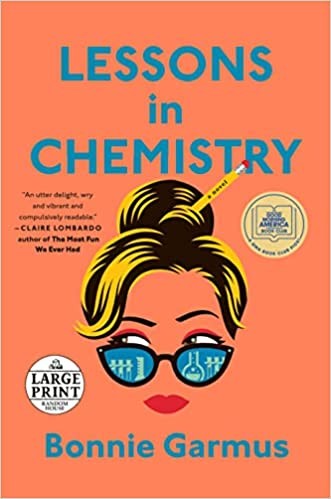
Elizabeth Zott is a chemist in 1960s California, so the research institute treats her as a secretary who won't smile. Fired for being pregnant, she ends up hosting a TV cooking show — and uses it to teach housewives chemistry, self-respect, and quiet rebellion, one 'Supper at Six' at a time.
A comic novel with a furnace inside: Zott refuses every costume the era hands her — muse, wife, victim, personality — and insists on being exactly what she is, a scientist. Garmus surrounds her with a found family (a grieving rower, a precocious daughter, a dog named Six-Thirty who narrates parts of the book) and lets the comedy carry a serious accounting of what institutional sexism cost a generation of women.
Garmus, a copywriter, wrote the opening chapter in a fury after a meeting where her idea was appropriated by a male colleague — she was 64 when the novel, her debut, published in 2022 after a 98-rejection earlier manuscript. It became a global word-of-mouth hit, the most-sold debut of its year.
Zott's show treats housewives as intelligent adults — 'combine one tablespoon acetic acid with a pinch of sodium chloride' — and the respect, not the recipes, is what makes it a phenomenon.
The boat scenes — Calvin's sport, then Elizabeth's — carry the book's theory of partnership: eight people pulling in exact trust, or nothing moves.
The dog's narration chapters (599 words learned and counting) shouldn't work and completely do — grief and loyalty rendered from a foot off the ground.
Elizabeth's daughter interrogates everything — including her own parentage — and her school-project family tree quietly assembles the novel's resolution.
Elizabeth accepts the TV job and immediately deletes the wardrobe, the winks, and the cocktail segment — her first broadcast, delivered like a lab lecture, nearly gets her fired and creates a devoted audience overnight.
A housewife stands up mid-show to say she's going back to medical school; Zott leads the studio in applause — the book's thesis in one scene: permission, granted woman to woman, on live television.
Furious and funny at the same time — Elizabeth Zott doesn't ask permission.