Theo Bennett★ Reader · Lv 2
todayHumbling. The generosity toward his jailers undid me.
It always seems impossible until it's done.
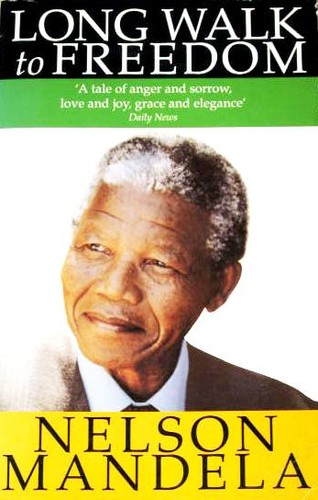
He entered prison a 44-year-old saboteur the state expected to break, and walked out 27 years later gray, smiling, and somehow larger than the government that jailed him. Four years after that, he was its president. Mandela's autobiography — begun in secret on Robben Island, buried in the prison garden — is the century's defining account of what freedom costs and forgives.
From a Thembu chief's household through Johannesburg law offices, the ANC Youth League, the armed turn after Sharpeville, the Rivonia trial's death-penalty dock, and the island's limestone quarry, Mandela narrates apartheid's rise and fall from inside every room where it was fought. The book's spine is his discipline: politics as long game, enemies as future partners, personal bitterness as a luxury leadership cannot afford. Freedom, he concludes, is indivisible — the jailer is unfree too — and the long walk doesn't end at liberation; that's merely where the road becomes visible.
Mandela and fellow prisoners drafted a memoir secretly on Robben Island in 1974–75, writing by night; the manuscript was buried in cocoa containers in the garden and partially discovered by guards (three prisoners lost study privileges for it), while a smuggled transcription survived. Completed with editor Richard Stengel after release, it was published in 1994 — the year of the election it ends with — and became the standard account, later a film. Its restraint is famous: he settled scores with almost no one.
From listening to tribal councils (the chief speaks last) to watching Gandhi-style protest meet gunfire, the early chapters trace each step by which a rural boy concluded nonviolence alone could not answer a state built on violence.
Facing execution, Mandela turned the dock into a stage — the four-hour statement ending 'an ideal for which I am prepared to die' is reproduced and contextualized: strategy, not martyrdom; he expected to hang.
Quarry debates, secret classes, chess-length negotiations with warders over long trousers — prison as the place he studied Afrikaans, studied his enemy, and rehearsed governing.
The secret talks begun WITHOUT his organization's mandate — tea with the justice minister, meetings with Botha and de Klerk — are the book's masterclass: knowing the exact moment strength permits talking, and talking without releasing the pressure.
On the ferry to Robben Island, guards taunt the prisoners; Mandela replies by quietly insisting on his title from the trial — and spends the next decades winning the long war of small dignities: long trousers, study rights, being addressed as a man. The revolution, conducted at the scale of a uniform.
The inauguration, 1994: jets of the same air force that once hunted him trail the new flag's colors overhead, and Mandela reflects that the oppressor must be liberated no less than the oppressed — the book closing its ledger with interest forgiven.
Humbling. The generosity toward his jailers undid me.