
Miles Ovadia★ Curator · Lv 5
todayRead it as anthropology, not instruction, and it's fascinating.
When you show yourself to the world and display your talents, you naturally stir all kinds of resentment, envy, and other manifestations of insecurity.
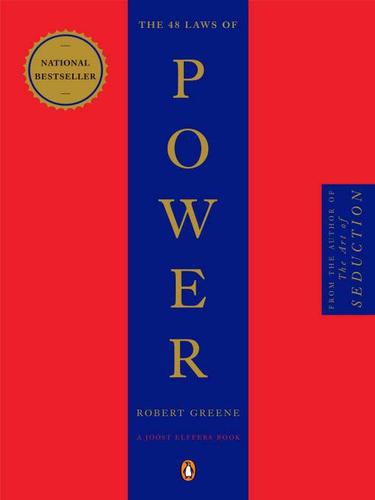
Never outshine the master. Say less than necessary. Crush your enemy totally. Greene's amoral field guide — drawn from three thousand years of courtiers, con artists, generals, and kings — became the book most requested in American prisons, most quoted in hip-hop, and most side-eyed in HR departments. Read as instruction or as armor; it works both ways.
Power has rules that operate regardless of whether you acknowledge them — that's Greene's premise. Each law (court attention, guard your reputation, play the perfect courtier) is argued through history's winners and cautionary corpses: Louis XIV's court, Talleyrand's survivals, con man Yellow Kid Weil's scripts. The book refuses to moralize; its claim is that the naive are not good, merely unarmed, and that seeing the game clearly is the only real choice you get.
Greene was a struggling screenwriter in his late thirties when a packager at an Italian art school asked what book he'd write; he pitched power stripped of pieties, drawing on Machiavelli, Sun Tzu, and Baltasar Gracián. Published in 1998 with its distinctive red-and-black design, it sold slowly, then permanently — over 1.2 million copies in the US alone, a fixture on rapper and CEO shelves alike, and banned in several prison systems for being too useful.
The opening law sets the method — Galileo naming Jupiter's moons after the Medici, courtiers executed for excellence — and the book's core insight: insecurity above you is more dangerous than incompetence below.
Law 5's argument that reputation is power's foundation — attack others' at your peril, guard yours with your life — reads differently, and more urgently, in the screenshot era.
Laws on concealing intentions, absorbing others' rhythms, and playing roles — Greene's court is a theater, and sincerity a costume choice with consequences.
Every law doubles as a diagnostic: if it's being run on you — the false generosity, the manufactured urgency, the isolation play — the book has already named it. The defensive reading is the wise one.
Nicolas Fouquet throws Louis XIV the most magnificent party in French history to display his loyalty and taste; three weeks later he's arrested for life, having outshone a king. Law 1's cautionary tale, unforgettable once read.
Con artist Victor Lustig 'sells' the Eiffel Tower to scrap dealers — twice — by understanding that people's greed writes the script for them. Greene's laws in miniature: the mark always cons himself.
Read it as anthropology, not instruction, and it's fascinating.