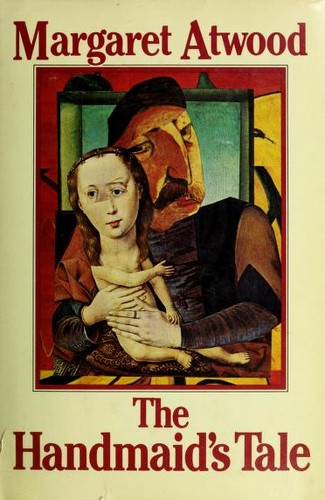
The Handmaid's Tale
Nolite te bastardes carborundorum. Don't let the bastards grind you down.
Why read it
In the Republic of Gilead — formerly the United States — fertility has collapsed, and women who can still bear children are property of the state, assigned to commanders and stripped of their names. Offred remembers when she had a job, a bank account, a daughter. That's what makes her dangerous.
Atwood's rule for the novel: nothing goes into Gilead that humans haven't already done somewhere. The result is 'speculative fiction' as audit — how quickly rights become privileges become memories, how theocracy recruits women against women, and how a person keeps a self alive when even her name is confiscated. Offred's narration, wry and hungry and precise, is the resistance.
Atwood began the book in West Berlin in 1984, typing behind the Wall while visiting Czechoslovakia and East Germany, and filed every element to real precedent — Puritan New England (her ancestors), Ceaușescu's natalist decrees, Iran's revolution. Published in 1985, it has never left print or controversy since, and its epilogue — a smug academic conference in 2195 — is the sharpest last chapter in the genre.
- 01
It happened slowly, then all at once
The flashbacks to 'the time before' — the frozen cards, the lost jobs, the husband who says he'll take care of her — are the novel's most quietly terrifying material.
- 02
Under His Eye
Gilead's surveillance is mostly other people; Atwood maps how a regime outsources watching to Marthas, Wives, Aunts, and Eyes until no one is safe including the enforcers.
- 03
The body as territory
The Ceremony, the birthing rituals, the red habit — the novel's central horror is bodily requisition dressed as scripture.
- 04
Nolite te bastardes carborundorum
A fake-Latin scrawl in a closet becomes Offred's relay from the handmaid before her — the book's argument that testimony itself is survival.
Offred and Ofglen's shopping walks — conversations conducted in orthodox phrases ('Blessed be the fruit') while each probes whether the other is a believer or an ally — are masterclasses in dialogue under censorship.
The Historical Notes epilogue: two centuries later, scholars debate Offred's tape recordings with donnish jokes — Atwood indicting the comfortable distance with which the future studies the suffering past.