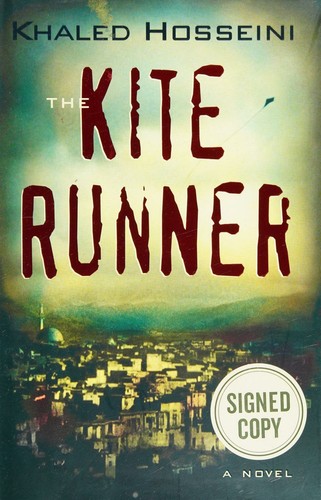
The Kite Runner
For you, a thousand times over.
Why read it
Two boys fly kites over 1970s Kabul: Amir, the privileged son, and Hassan, the servant's boy who would do anything for him. One winter afternoon, Amir commits a betrayal so complete it takes him — and Afghanistan — decades and a war to answer for.
A story about the long half-life of cowardice: Amir's single failure to defend Hassan metastasizes through emigration, his father's secrets, and the Taliban's rise, until a phone call offers him 'a way to be good again.' Hosseini folds forty years of Afghan history — monarchy, Soviet invasion, civil war, Taliban — into one family's ledger of guilt and atonement.
Hosseini was a practicing physician in California, writing at 4 a.m. before hospital rounds, when he published this debut in 2003 — the first Afghan novel written in English to reach a mass Western audience, arriving two years after the world's attention had turned to his birthplace. He drew the Kabul chapters from his own 1970s childhood before his family's asylum in the U.S.
- 01
The alley
The novel's central scene — what Amir watches happen to Hassan and does nothing to stop — is rendered once and echoes on nearly every page after.
- 02
Baba's ledger
Amir's magnetic, mountain-sized father carries his own secret betrayal; the parallel between father and son reframes everything when it lands.
- 03
Afghanistan in three acts
Kabul's cosmopolitan 70s, the refugee flight through Pakistan, and a Taliban-ruled return — history experienced at street level.
- 04
A way to be good again
The redemption arc runs through Sohrab, Hassan's son — and Hosseini makes Amir earn it physically, painfully, and incompletely.
The kite tournament: Amir finally wins his father's pride on the same afternoon he loses his own honor — Hosseini staging triumph and moral collapse in a single hour.
Years later in California, Baba the Kabul aristocrat pumps gas and shops garage sales with unbroken dignity — some of the best pages ever written about what exile does to fathers.