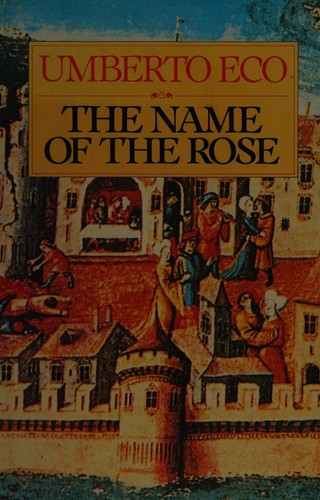
The Name of the Rose
by Umberto Eco
The good of a book lies in its being read.
Why read it
A brilliant Franciscan friar and his young novice arrive at an Italian abbey to settle a theological dispute, and find monks dying one by one in ways that seem to follow the pattern of the Apocalypse.
Eco wraps a medieval murder mystery around a labyrinthine library and a debate over laughter, heresy, and forbidden knowledge. William of Baskerville reasons like a fourteenth-century Sherlock Holmes, and the investigation becomes a meditation on signs, faith, and the limits of certainty.
Eco, a semiotics professor, published his first novel in Italian in 1980; it became an international bestseller and was translated into English in 1983. He later wrote a whole book, 'Postscript to The Name of the Rose,' explaining its construction.
- 01
Detection as semiotics
William reads clues like signs, and the novel turns interpretation itself into its central drama.
- 02
The fear of laughter
The hidden crime centers on a book that would sanction comedy, which the killer believes would destroy faith.
- 03
The labyrinth library
The maze-like library embodies knowledge hoarded, guarded, and made dangerous.
- 04
Heresy and power
The disputes between orders and the Inquisition show how ideas become matters of life and death.
William deduces the appearance and name of a runaway horse, Brunellus, from tracks in the snow before he has entered the abbey, announcing his method.
The final confrontation in the hidden library ends with the blind monk Jorge eating the poisoned pages of Aristotle's lost book on comedy as the whole library burns.