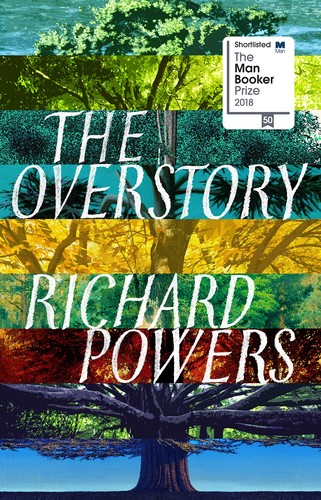
The Overstory
The best arguments in the world won't change a person's mind. The only thing that can do that is a good story.
Why read it
Nine strangers, each marked by an encounter with a tree, are drawn together by a fight for the last of the ancient forests, and the novel asks whether humans can learn to hear a slower, larger form of life before it is gone.
Richard Powers structures the novel like a tree, roots, trunk, crown, weaving separate human stories into a single canopy about activism, science, and our failure to perceive the intelligence of forests. As some characters risk everything to stop old-growth logging, the book insists trees are not scenery but actors. It is fiction that tries to decenter the human and make the reader feel deep, arboreal time.
Richard Powers published The Overstory in 2018, and it won the 2019 Pulitzer Prize for Fiction and was shortlisted for the Booker Prize. Widely credited with changing how many readers see trees, it drew on real science of forest communication.
- 01
Structured like a tree
What awaits is a novel that grows from separate roots into a shared crown of story.
- 02
Trees as characters
The book asks you to grant forests agency, memory, and communication of their own.
- 03
The limits of activism
Characters test how far conviction can go against industry, law, and time.
- 04
Deep time
You are pulled into a timescale where a human life is a single leaf-fall.
Patricia Westerford, the tree scientist ridiculed for claiming forests communicate, later vindicated as real science catches up to her.
Olivia and Nick living for months high in the canopy of an ancient redwood they name Mimas, to keep loggers from felling it.