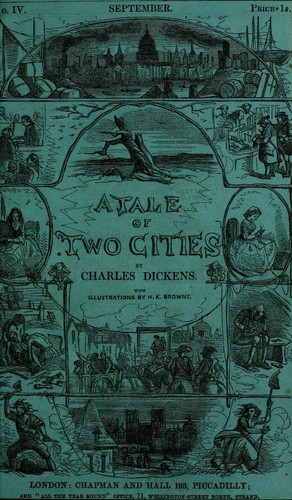
A Tale of Two Cities
It was the best of times, it was the worst of times.
Why read it
London and Paris in the years around the French Revolution, where a wine cask shatters in a Paris street and the poor lap the wine from the cobblestones, a red omen of the blood soon to run. Dickens turns the Terror into an intimate story of resurrection and sacrifice.
Against the vast machinery of revolution, Dickens tells a story of private redemption. A wasted, cynical English lawyer, Sydney Carton, and a doctor imprisoned for eighteen years in the Bastille are bound to the same family, and the novel asks what a single life is worth when history turns violent. It is about being recalled to life, and about the terrible arithmetic of love.
Serialized in 1859 in Dickens's own weekly journal All the Year Round, it was written when his marriage was collapsing and he was consumed by an amateur theatrical about sacrifice. He drew heavily on Carlyle's history of the French Revolution. It is one of the best-selling novels of all time, with estimates in the hundreds of millions of copies.
- 01
Recalled to life
Dr. Manette's release from eighteen years in the Bastille opens the book and sets its governing theme of resurrection.
- 02
The doubles
Charles Darnay and Sydney Carton are near-identical in face but opposite in fortune, a resemblance the plot will use to devastating effect.
- 03
Madame Defarge
Knitting the names of the condemned into her register, she embodies revenge curdled into implacable, patient hatred.
- 04
Mob and machine
Dickens renders the crowd and the guillotine as forces of nature, terrifying because they are both just and merciless.
The storming of the Bastille, with Madame Defarge at the front of the surging crowd, is Dickens's set-piece of collective fury.
The final procession of tumbrils to the guillotine, and Carton's quiet act of substitution, close the novel on its famous scaffold.