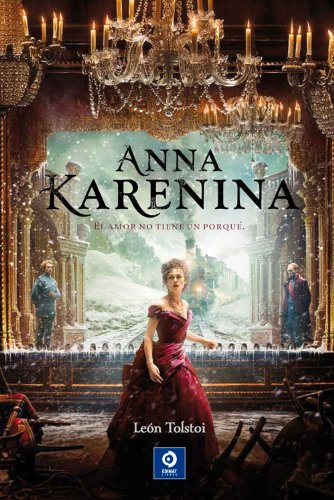
Anna Karenina
by Leo Tolstoy
All happy families are alike; each unhappy family is unhappy in its own way.
Why read it
A married woman falls for a cavalry officer at a Moscow train station, and Russian high society — which forgives everything discreet — destroys her for being sincere. Tolstoy's masterpiece runs her story against a country landowner's search for meaning, and somehow both halves are the best novel ever written.
Two arcs cross: Anna, magnetic and honest, wrecks her position for Vronsky and discovers that passion outside the rules has no place to stand; Levin, awkward and searching, farms, marries, doubts God, and stumbles toward something like peace. Tolstoy's genius is refusing sides — every character, down to Anna's dull husband, gets an interior life so complete that judgment keeps dissolving into understanding. The famous first line about unhappy families is the thesis; 800 pages prove it case by case.
Tolstoy began it in 1873 after seeing the body of a neighbor's mistress who had thrown herself under a train — the novel works backward from that image. Serialized over four years, it ended in a public fight: his publisher refused the final part over its criticism of Russian war fever, so Tolstoy printed it separately. Within a decade he renounced fiction entirely; this is the last novel he wrote as a novelist first.
- 01
The double plot
Anna falls as Levin climbs — society's brilliant center dying while its awkward margin finds a life. The braid is the argument: the same world, two verdicts.
- 02
Interior weather
Tolstoy narrates from inside everyone — a dying brother, a jealous husband, briefly even a hunting dog. The technique critics call his 'making strange' turns familiar life newly visible.
- 03
Society's arithmetic
Vronsky's career survives; Anna's calls vanish. The novel is precise about the ledger — what men pay for scandal, what women pay, and who keeps the books.
- 04
Levin's answer
The proto-Tolstoyan ending — meaning found not in argument but in work, family, and a peasant's phrase about living for the soul — previews the conversion that consumed the author.
The steeplechase: Vronsky, ahead and certain, makes one clumsy shift and breaks his mare's back — while Anna, watched by her husband, cannot hide her terror for her lover. Tolstoy stages the whole tragedy in a horse race, in miniature, chapters before it happens.
Kitty and Levin's proposal by chalk initials — he writes the first letters of a sentence, she completes it, twice over — remains fiction's most tender depiction of two minds finding they already know each other. Tolstoy proposed to his own wife the same way.