
Theo Bennett★ Reader · Lv 2
todayThe interrogation chapters are the best psychological cat-and-mouse ever written.
Pain and suffering are always inevitable for a large intelligence and a deep heart.
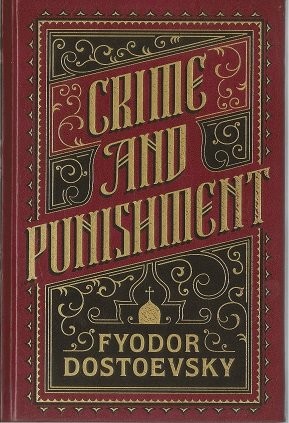
A destitute ex-student in a St. Petersburg garret convinces himself that extraordinary men are permitted extraordinary acts — and takes an axe to a pawnbroker to prove he's one of them. The murder takes thirty pages. The punishment — inside his skull — takes the rest of the book, and no thriller since has matched it.
Raskolnikov's theory is the 19th century's most dangerous idea in miniature: if God is dead and greatness self-authorizing, why shouldn't a future Napoleon step over one vile old woman? Dostoevsky grants the premise and then runs the experiment honestly — fever, paranoia, compulsive confession-flirting, and the slow discovery that he has not stepped over the old woman but severed himself from mankind. Salvation arrives, barely, through Sonya, a prostituted girl whose irrational goodness his theory cannot survive.
Dostoevsky wrote it in 1866 mid-catastrophe: epileptic, freshly bereaved of wife and brother, and so buried in gambling debts he'd signed away his future works — dictating The Gambler simultaneously to the stenographer he then married. He knew the material personally: a decade earlier he'd stood before a firing squad for radical politics, reprieved at the last second and sent to Siberian prison camp, where the novel's epilogue lives.
Raskolnikov's article divides mankind into material and Napoleons — Dostoevsky's dead-serious preview of the century that would test the idea at industrial scale.
The title's real sequence: guilt arrives as physiology — fever, dissociation, the compulsion to return to the scene — long before any handcuffs. The first great psychological crime novel.
Three interviews, no evidence, pure pressure on a mind that wants to confess — the interrogation chapters are the template for every detective who wins by waiting.
The book's answer to nihilism isn't a rebuttal but a person — meek, faithful, degraded, and unanswerable. Reading Lazarus aloud in a rented room, she wins the argument without making one.
The murder itself goes instantly wrong: the pawnbroker's gentle half-sister Lizaveta walks in, and the theorist of the single justified death kills her too — the theory refuted by page 80, with 500 pages of consequences to go.
Raskolnikov bows to kiss the earth at the Haymarket crossroads, as Sonya instructed, and a bystander laughs that he's drunk — confession as public spectacle, grace arriving in humiliation. Dostoevsky's whole theology in one street scene.
The interrogation chapters are the best psychological cat-and-mouse ever written.