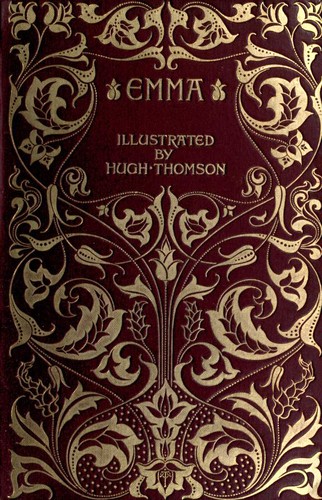
Emma
by Jane Austen
Emma Woodhouse, handsome, clever, and rich, with a comfortable home and happy disposition, seemed to unite some of the best blessings of existence.
Why read it
A clever young woman who is certain she knows what is best for everyone around her keeps arranging their hearts, and keeps getting it spectacularly wrong.
Emma Woodhouse, rich and self-satisfied, appoints herself matchmaker to her small town and steadily mistakes her own vanity for insight. Austen builds a comedy of misreading in which the heroine must learn to see other people, and herself, clearly before she can grow up.
Austen published Emma in December 1815 (dated 1816), dedicating it, at his suggestion, to the Prince Regent, whom she disliked. She reportedly described Emma as 'a heroine whom no one but myself will much like,' and the novel is now often called her most perfectly constructed.
- 01
The danger of matchmaking
Emma's schemes for Harriet show how good intentions plus vanity can wreck other people's chances at happiness.
- 02
Free indirect style
Austen slips in and out of Emma's mind so smoothly that the reader shares her errors before catching them.
- 03
Reading people wrongly
Nearly every character misjudges another, making perception itself the novel's real subject.
- 04
Growth through humility
Emma's education comes from being humbled, especially after her cruelty at Box Hill.
At the Box Hill picnic Emma mocks the kindly, talkative Miss Bates, and Mr. Knightley rebukes her in a scene that reorders her whole sense of herself.
Emma persuades Harriet to refuse the farmer Robert Martin, setting off a chain of misunderstandings about who loves whom.