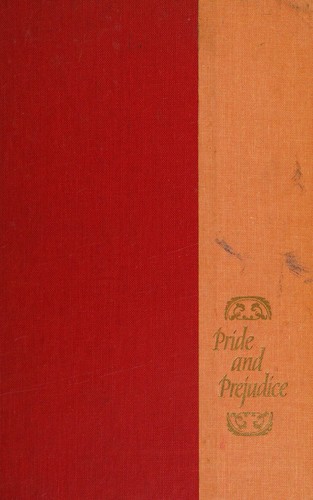
Pride and Prejudice
by Jane Austen
It is a truth universally acknowledged, that a single man in possession of a good fortune, must be in want of a wife.
Why read it
A rich, rude stranger snubs Elizabeth Bennet at a country dance; she spends the next four hundred pages being brilliantly, quotably wrong about him — and he about her. Two centuries on, this is still the sharpest romantic comedy in the language, and the blueprint for every enemies-to-lovers story since.
Austen's machine has two engines: a marriage market where women's entire economic fate hangs on one decision, and two intelligent people whose first impressions — his pride, her prejudice — must be dismantled by evidence. The romance works because it's epistemology: Elizabeth doesn't change her heart until she changes her mind, letter by letter, fact by fact.
Austen drafted it as 'First Impressions' in her early twenties (her father's publisher rejected it sight unseen), then revised it fifteen years later and published anonymously — 'By the author of Sense and Sensibility' — in 1813. She sold the copyright outright for £110, one of publishing history's worst deals for an author and best for everyone since.
- 01
The truth universally acknowledged
The most famous opening line in English fiction is a joke about economics — and the whole novel keeps its double vision: romance as feeling and as financial system.
- 02
The letter
Darcy's mid-book letter is the hinge: the same facts, reframed, force Elizabeth's reckoning — 'Till this moment I never knew myself.'
- 03
The supporting gallery
Mr. Collins's proposal, Lady Catherine's condescension, Mrs. Bennet's nerves — Austen's comic monsters are so precisely drawn they've become personality types.
- 04
Charlotte's choice
Elizabeth's best friend marries the ridiculous Collins for security, clear-eyed — Austen's unsentimental control case for what refusing romance-as-luxury actually cost women.
The first proposal: Darcy declares love 'against his will, against his reason' and Elizabeth refuses him with both barrels — the scene every adaptation builds toward, and the rare romance where the rejection is the best dialogue.
Lady Catherine's ambush in the Longbourn garden — demanding Elizabeth promise never to marry Darcy — backfires perfectly: her report of Elizabeth's refusal is what tells Darcy he still has hope.