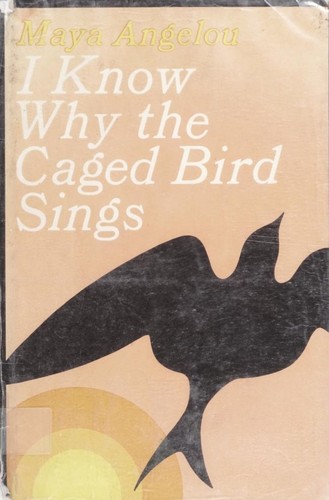
I Know Why the Caged Bird Sings
by Maya Angelou
There is no greater agony than bearing an untold story inside you.
Why read it
A three-year-old arrives in segregated Arkansas wearing a wrist tag addressed to her grandmother, like a package. By sixteen she has survived rape, five years of self-imposed silence, and every humiliation the Jim Crow South could design — and discovered that her voice, once she chose to use it again, could hold all of it. The memoir that changed what memoirs were allowed to say.
Angelou's first volume runs from abandonment in Stamps, Arkansas — where Grandmother Henderson's general store is the fixed point of Black community life — through the St. Louis assault that struck her mute, to a San Francisco adolescence ending in defiant motherhood. Its revolution was double: the unprecedented candor (childhood sexual violence, named plainly, decades before the culture could) and the instrument itself — a poet's prose proving that a Black girl's interior life was epic material. The caged bird sings, Dunbar's poem says, because song is what the cage can't confiscate.
At a 1968 dinner party weeks after Dr. King's assassination (on her birthday), James Baldwin and editor Robert Loomis goaded Angelou — then a poet, singer, and civil-rights organizer — by saying autobiography as literature was nearly impossible. She took the dare. Published 1969: two years on the bestseller list, a National Book Award nomination, permanent residence on both banned-books lists and school curricula — and five further volumes, ending where her public life began.
- 01
The five silent years
After naming her rapist led to his killing, young Maya concluded her voice could murder — and stopped speaking. The silence chapters, and Mrs. Flowers who ended them with books read aloud, are the memoir's core: language lost and deliberately re-earned.
- 02
Stamps, Arkansas as a world
The Store, the cotton wagons, the 'powhitetrash' children taunting her grandmother — Angelou renders segregation not as backdrop but as a total physics every gesture must calculate against.
- 03
Momma's dignity
Grandmother Henderson — landowner, matriarch, singing hymns while children mock her — embodies the book's studied lesson in surviving with selfhood intact: resistance calibrated to what survival allows.
- 04
Displacement as the through-line
Angelou called it the theme: shuttled between Arkansas, St. Louis, and California, belonging nowhere — until the final chapters seize agency (first Black streetcar conductor in San Francisco, motherhood claimed on her own terms).
Graduation, 1940: a white official's speech reduces the Black eighth-graders' futures to athletes and maids — until the valedictorian leads 'Lift Ev'ry Voice and Sing' and Maya understands, mid-hymn, that her people's poets had already answered him.
The dentist scene: Momma reminds Dentist Lincoln he owes her money from the Depression; he replies he'd 'rather stick his hand in a dog's mouth than in a nigger's.' Momma's quiet extraction of interest — and Maya's fantasy of her grandmother's secret powers — hold the book's whole method: dignity, rage, and imagination sharing one page.