It
by Stephen King
We all float down here.
Why read it
Every 27 years something ancient wakes beneath a small Maine town and feeds on its children, and the only people who remember it are seven adults who swore, as kids, to come back and finish it.
King cuts between 1958 and 1985 as the Losers' Club faces a shape-shifting evil that most often appears as Pennywise the clown. Across a thousand pages the novel becomes an epic about childhood, memory, friendship, and the way fear itself is the thing that gives monsters their power.
Published in 1986, It was one of King's most ambitious novels and a number-one bestseller. He has said the idea began with the image of a troll under a bridge, transposed to the sewers of a small town, and the book helped make coulrophobia, fear of clowns, a cultural touchstone.
- 01
Childhood versus adulthood
The dual timeline shows what the friends gained and lost between eleven and forty.
- 02
Fear made flesh
It takes the shape of each victim's deepest fear, so the enemy is fear itself.
- 03
The power of the group
The Losers can only wound It when they stand together and believe.
- 04
A town's buried evil
Derry's history of forgotten atrocities suggests the real horror is collective denial.
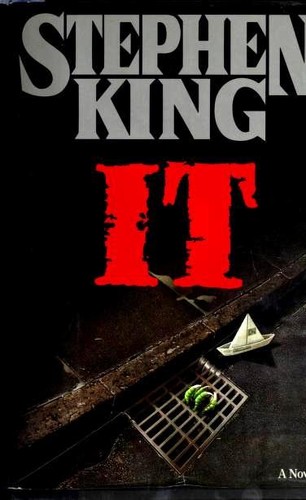
The novel opens with little Georgie Denbrough reaching for a paper boat in a storm drain, where Pennywise waits and pulls him under.
As adults the Losers reunite at a Chinese restaurant, where the fortune cookies burst open with blood and horrors, forcing them to remember.