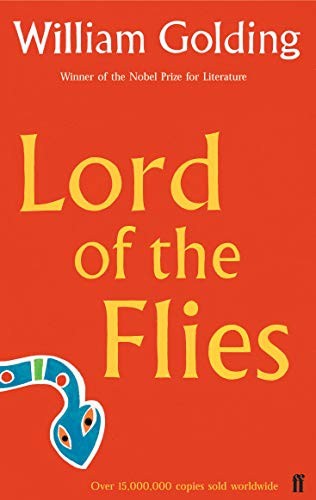
Lord of the Flies
Maybe there is a beast... maybe it's only us.
Why read it
A planeload of British schoolboys crash-lands on a tropical island with no adults, and the paradise curdles faster than anyone expects. What starts as an adventure becomes a study of how thin the crust of civilization really is.
Golding strips away society to ask whether cruelty is learned or innate. As the boys splinter into the rule-keepers around Ralph and the hunters around Jack, the novel argues that savagery is not something that invades us from outside but something that was always waiting inside. The 'beast' they fear turns out to be themselves.
Published in 1954, it was Golding's debut, rejected by 21 publishers before Faber took it. A WWII naval officer who had seen combat, Golding wrote it partly as a dark answer to the sunny castaway adventure The Coral Island. It sold modestly at first, then became a school staple and helped earn him the 1983 Nobel Prize in Literature.
- 01
The conch and order
A single shell becomes the fragile symbol of democratic order and the right to speak. Watching what happens to it tells you where the island is heading.
- 02
Ralph vs. Jack
The slow-burn rivalry between the boy who wants rescue and rules and the boy who wants meat and power drives the whole descent.
- 03
Piggy and reason
The asthmatic, spectacled outsider is the voice of intellect and science, and the group's treatment of him is the book's grimmest barometer.
- 04
The beast
The imagined monster on the mountain is the pivot on which fear turns into ritual, and ritual into violence.
Simon's solitary encounter with the pig's head on a stick, the 'Lord of the Flies,' which seems to speak to him about the evil inside every person, is the novel's hallucinatory center.
The hunt for Ralph in the final chapters, with the whole island set ablaze, ends on the beach with the sudden, deflating arrival of a naval officer who sees only 'fun and games.'