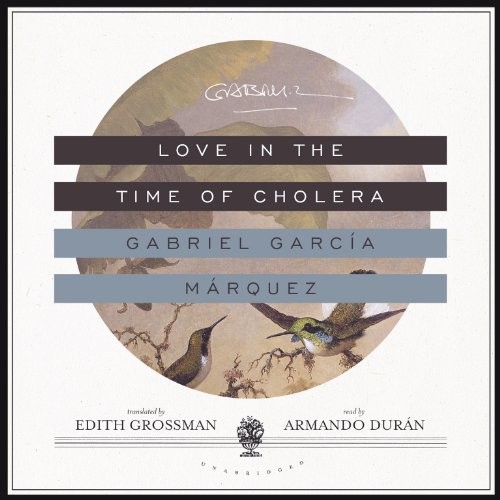
Love in the Time of Cholera
It was inevitable: the scent of bitter almonds always reminded him of the fate of unrequited love.
Why read it
A young telegraph clerk falls for a beautiful girl who marries a respectable doctor instead. He waits for her, through fifty-one years, nine months, and four days, for the moment he can declare his love again.
Love in the Time of Cholera follows Florentino Ariza's lifelong devotion to Fermina Daza across half a century of Caribbean life, marriage, and aging. Garcia Marquez turns romantic obsession into a sweeping meditation on love in all its forms, from the idealized to the carnal to the enduring. It asks whether love is a sickness, a salvation, or simply a decision to persist.
Gabriel Garcia Marquez published El amor en los tiempos del colera in 1985, after winning the Nobel Prize in Literature in 1982. He drew partly on the long courtship of his own parents. The novel became one of his most beloved works and cemented his stature as a master of Latin American letters.
- 01
Love as affliction
The book plays with the idea that lovesickness and cholera share the same symptoms and delirium.
- 02
The persistence of desire
Florentino's decades of waiting probe whether constancy is devotion or self-deception.
- 03
Many faces of love
From marriage to fleeting affairs, the novel maps love in all its contradictory shapes.
- 04
Aging and second chances
Its boldest claim is that passion and beginnings belong to the old as much as the young.
Florentino writing endless love letters to Fermina in his youth, conducting an entire courtship through the telegraph and the written word.
The final voyage on the riverboat flying the yellow cholera flag, where the elderly couple sail on together, refusing to turn back.