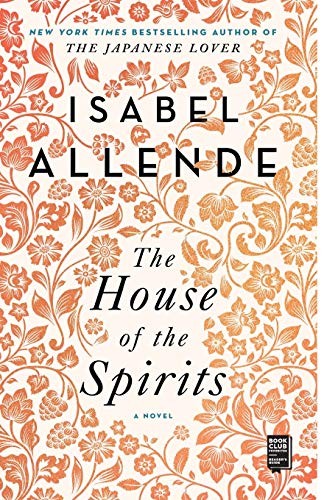
The House of the Spirits
Memory is fragile and the space of a single life is brief, passing so quickly that we never get a chance to see the relationship between events.
Why read it
A green-haired clairvoyant, a patriarch with a volcanic temper, and a family whose fortunes rise and fall alongside a nation sliding toward dictatorship. Three generations of women inherit a book of secrets and a gift for seeing what others cannot.
The House of the Spirits chronicles the Trueba family across decades of love, class conflict, and political upheaval in an unnamed country resembling Chile. Isabel Allende blends magical realism with a fierce political and feminist vision, following strong women who endure the violence of the men and the history around them. It is a family saga that becomes a national reckoning.
Isabel Allende began The House of the Spirits in 1981 as a letter to her dying grandfather, and it grew into her debut novel, published in 1982. It draws on her own family and on Chile's 1973 military coup, in which her relative President Salvador Allende died. The book became an international bestseller and a landmark of Latin American literature.
- 01
Women who endure
Clara, Blanca, and Alba embody a female strength that outlasts the era's brutal patriarchs.
- 02
The personal as political
The family's private dramas map directly onto a country's slide into dictatorship.
- 03
Memory against violence
Writing and remembering become the means of surviving and resisting terror.
- 04
Cycles and reconciliation
The saga traces how cruelty echoes across generations, and how it might finally be broken.
Clara the clairvoyant predicting deaths and moving objects with her mind, and falling silent for years after a childhood trauma.
The military coup and its aftermath, when Alba is imprisoned and tortured, and the family's private history collides with the nation's.