
Miles Ovadia★ Curator · Lv 5
todayNot really about baseball. It's about seeing what everyone else misses.
What begins as a failure of the imagination ends as a market inefficiency.
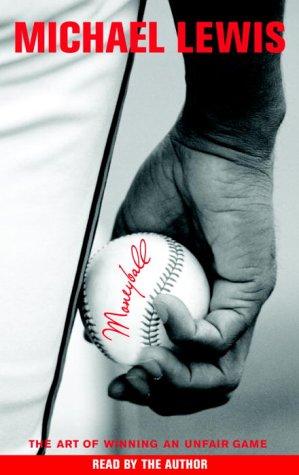
The Oakland Athletics have one of the lowest payrolls in Major League Baseball, yet they keep winning as many games as teams spending three times as much. Their secret is not a superstar but a heretical idea: that almost everyone in baseball is measuring the wrong things.
General manager Billy Beane and his analysts use overlooked statistics like on-base percentage to find undervalued players the scouts have written off, exploiting the inefficiencies of a market ruled by tradition and gut instinct. Lewis uses the story to show how rigorous data can overturn expert intuition in any field. It is a business and decision-making classic disguised as a baseball book.
Michael Lewis published Moneyball in 2003 after embedding with the Oakland A's during their 2002 season. It became a massive bestseller, influenced front offices across professional sports, and was adapted into a 2011 film starring Brad Pitt. Its ideas helped mainstream the analytics movement now standard in baseball and beyond.
The takeaway is to question inherited metrics and find the statistics that actually predict success.
Bias and tradition create bargains, and disciplined analysis can systematically exploit them.
The A's judged players by outcomes and evidence, not the aesthetics scouts had always prized.
Being right and early, against consensus, is where the real edge lives, in sport and business alike.
The A's converting injured catcher Scott Hatteberg into a first baseman purely because of his patient eye and high on-base percentage.
Drafting the overweight, widely dismissed catcher Jeremy Brown over conventionally 'toolsy' prospects, trusting the numbers over the scouts.
Not really about baseball. It's about seeing what everyone else misses.