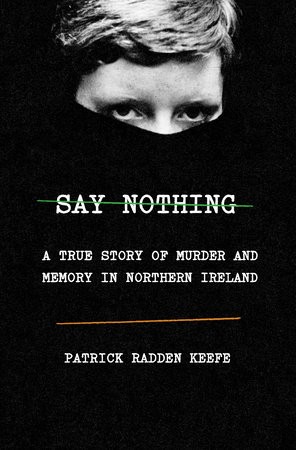
Say Nothing
The dead can't cry out for justice; it is a duty of the living to do so for them.
Why read it
In 1972 Belfast, a widowed mother of ten is abducted from her home in front of her children and never seen alive again, a disappearance that becomes a window into the secret war of the Troubles.
Keefe uses the murder of Jean McConville to unravel the whole history of the IRA's armed campaign, following real militants across decades of violence, betrayal, and the uneasy peace that followed. It is a masterwork of narrative journalism about memory, guilt, and what a conflict does to the people who wage it.
Published in 2018, it won the National Book Critics Circle Award and was named one of the best books of the decade by several outlets. It was adapted into a 2024 television series.
- 01
One disappearance, whole war
The takeaway is how a single unsolved murder opens onto the entire history of the Troubles.
- 02
The believers
Figures like Dolours Price show how ordinary young people were drawn into armed struggle.
- 03
The Boston tapes
A secret oral-history archive of ex-combatants becomes a ticking legal and moral time bomb.
- 04
The cost of peace
The book weighs what former fighters must bury, or confess, to live with what they did.
The abduction of Jean McConville from her Divis Flats home as her terrified children looked on.
Dolours Price's account of her role in the IRA and the 1973 Old Bailey bombing in London.