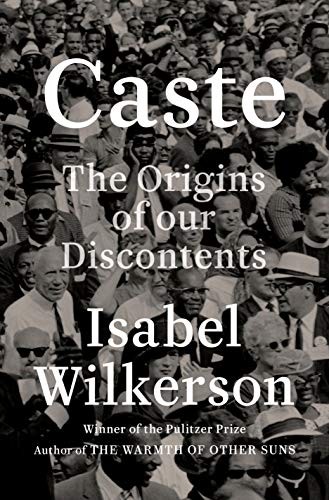
Caste
Caste is the granting or withholding of respect, status, honor, attention, privileges, resources, benefit of the doubt, and human kindness to someone on the basis of their perceived rank.
Why read it
Why does inequality in America feel so stubborn, so scripted, so hard to name? Wilkerson's answer is that beneath race lies an older and more rigid structure: a caste system that assigns human value by birth, as ruthless as any in the world.
Wilkerson argues that America operates a hidden caste hierarchy, and she compares it to India's caste system and Nazi Germany's racial order to reveal its shared architecture. By reframing race as caste, she offers a new lens for understanding the machinery that keeps a rank of human beings fixed in place.
Isabel Wilkerson, a Pulitzer Prize-winning journalist, published Caste in 2020 to wide acclaim; it was an Oprah's Book Club pick and a finalist for the National Book Critics Circle Award. It follows her landmark history of the Great Migration, The Warmth of Other Suns, and became a major bestseller.
- 01
Race versus caste
You gain a distinction that reframes the debate: race is the visible tool, caste is the deeper structure of ranked human worth.
- 02
The eight pillars
Wilkerson identifies shared features, from divine justification to dehumanization, that undergird caste systems across societies.
- 03
Three systems compared
By setting America beside India and Nazi Germany, she exposes the common logic that scholars often keep separate.
- 04
The cost to everyone
A key takeaway is that caste damages even those it privileges, distorting a whole society's health and empathy.
Wilkerson's account of how Nazi lawyers studied American race law while designing the Nuremberg statutes, finding even it too harsh in places.
Her personal anecdote of a plumber who thaws toward her only once she acknowledges his own losses, illustrating caste breaking down through empathy.