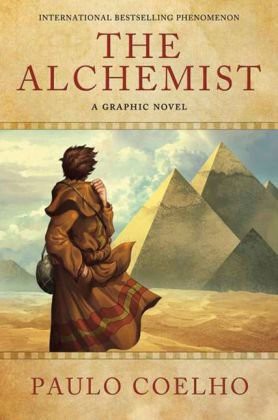
The Alchemist
by Paulo Coelho
When you want something, all the universe conspires in helping you to achieve it.
Why read it
A young shepherd sells his flock to chase a recurring dream about treasure at the Egyptian pyramids — and discovers the journey itself is the treasure everyone else gave up on. Sixty-five million readers later, this remains the world's favorite fable about following your calling.
Santiago's quest for his 'Personal Legend' — the thing you were put here to do — is Coelho's argument in story form: when you truly commit to a dream, obstacles become teachers, strangers become omens, and 'all the universe conspires in helping you to achieve it.' Read literally it's an adventure; read the way it's meant, it's a mirror.
Coelho wrote the novel in just two weeks in 1987, saying it was 'already written in my soul' — drawn from his own detour through law school, songwriting, and a pilgrimage on the Camino de Santiago before committing to writing at 38. Its first Brazilian publisher dropped it after tiny sales; word of mouth turned it into a phenomenon translated into 80+ languages.
- 01
The Personal Legend
The book's core vocabulary: everyone knows their calling in childhood, and most spend adulthood talking themselves out of it — Santiago's journey is the road back.
- 02
Omens and beginner's luck
The fable's practical psychology: early wins recruit you, setbacks test you, and attention to signs is really attention to your own resolve.
- 03
The crystal merchant's warning
The book's most quietly devastating character keeps deferring his pilgrimage to Mecca because the dream fulfilled would leave him nothing to live for — the cautionary counter-life to Santiago's.
- 04
Treasure is where you started
The famous ending inverts the whole quest — what you seek is often at home, but you could only see it by leaving.
Santiago trades his flock for passage to Africa and is robbed of everything within a day — the story's first lesson that commitment is tested immediately, and that rock bottom in Tangier becomes a crystal shop apprenticeship that teaches him commerce, patience, and Arabic.
In the desert, the alchemist forces Santiago to turn himself into the wind — not by magic, but by talking with the desert, the wind, and the sun until fear runs out. It's the novel's thesis scene: transformation is negotiation with everything you're afraid of.