

Naila Karim★ Scout · Lv 6
todayThe most alive voice I've ever read. That's the tragedy and the gift.
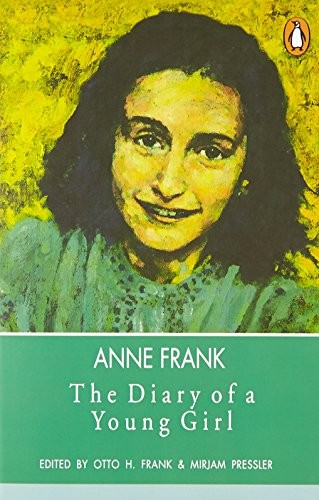
by Anne Frank
In spite of everything, I still believe that people are really good at heart.
For her thirteenth birthday, weeks before her family vanished into a hidden annex behind an Amsterdam office, Anne Frank received a red-checkered notebook. For two years she filled it — funny, furious, self-examining, alive — while the war closed in. It became the most widely read testimony of the Holocaust: one voice standing for six million.
Eight people in sealed rooms above a warehouse — the Franks, the van Pelses, a dentist — depending on helpers for every potato, freezing at every doorbell. Anne records it all: the quarrels and small tyrannies of confinement, her war with her mother, first love with Peter, and a writer's ambition sharpening by the month. The diary's power is the collision the reader can't stop seeing: an utterly normal adolescence, and what history did to it three days after the final entry.
Anne rewrote her entries in 1944 after hearing a radio appeal for war diaries, editing with a published book in mind — 'Het Achterhuis,' she'd call it. After the betrayal and arrests, helper Miep Gies gathered the scattered pages and kept them unread in a desk drawer, returning them to Otto Frank, the annex's only survivor. He fulfilled his daughter's ambition in 1947; the 'definitive edition' now restores the entries he'd softened.
Anne edits, drafts short stories, rates her own prose — reading her as an author in progress, not a saint, is what she wanted and what the diary rewards.
Ration books, a shared toilet's schedule, Westerkerk bells, burglars below — the diary is the most detailed record we have of hiding as a daily logistics problem.
Her own diagnosis: the cheerful performer everyone sees, and the deeper self nobody's allowed to meet. The most precise account of adolescent interiority in literature, written under history's worst pressure.
'I still believe people are truly good at heart' was written by a girl who didn't yet know Bergen-Belsen; the diary asks you to hold her hope and her fate together, without letting either cancel the other.
The morning routine of silence — no water, no footsteps, whispering until the warehouse workers leave at half past five — ordinary life re-engineered around the sound of one's own existence.
April 1944: 'I want to go on living even after my death!' — written as a girl's ambition, fulfilled as no author has ever had it fulfilled, by the worst possible route.
The most alive voice I've ever read. That's the tragedy and the gift.