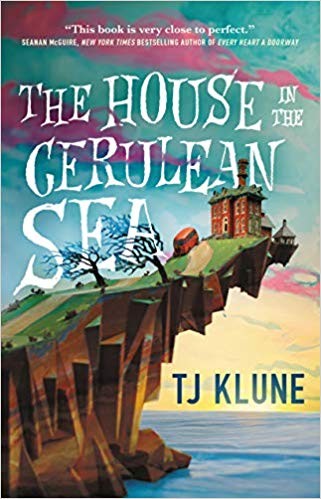
The House in the Cerulean Sea
by TJ Klune
Change often starts with the smallest of whispers. Like-minded people building it up to a roar.
Why read it
Linus Baker, forty, government caseworker, owner of one cat and no expectations, is dispatched by Extremely Upper Management to audit a classified island orphanage — six magical children including a gnome with a shovel, a were-Pomeranian, and the six-year-old Antichrist, who mostly wants to be a bellhop. The kindest book of its decade, and it knows exactly what it's doing.
Klune writes bureaucracy versus belonging: Linus arrives with his RULES AND REGULATIONS and his clipboard, prepared to file the children as threats, and the island patiently unfiles him instead. Under the cozy surface is a precise allegory about registration, othering, and inspection regimes — the children are 'classified' by what they might do, not what they've done — and the book's radical proposal is that safety is built by love and porch dinners, not surveillance. Arthur Parnassus, the orphanage's guarded headmaster, is both the romance and the argument.
Klune has said the book grew from learning about Canada's Sixties Scoop — Indigenous children removed from families 'for their own good' — refracted into fantasy's registration tropes; he wrote the kindness deliberately, as craft rather than accident. Published 2020 into the pandemic's exact need: word-of-mouth pushed it to the #1 NYT slot a year after release, an Alex Award, and a sequel (Somewhere Beyond the Sea).
- 01
The audit inverted
Linus comes to evaluate the children; the book's engine is the reverse audit — every rule he cites gets tested against what he can see with his own eyes, until the clipboard loses.
- 02
Lucy
The Antichrist as a six-year-old with nightmares and a Big Band obsession — Klune's best trick: the scariest file on the island is the book's funniest, most breakable child.
- 03
Change the world by one garden
Arthur's pedagogy — chores, music, chosen names, the daily practice of being unafraid — argues that revolution can be domestic; the village ferry ride makes the politics explicit.
- 04
Don't you wish you were here?
The recurring postcard question becomes Linus's whole arc: the distance between a life that's fine and a life that's his, measured in cerulean.
The village outing: shopkeepers recoil from the children until Lucy — the literal Antichrist — charms a record-store owner over Big Band vinyl, and Linus, astonished, watches prejudice lose to a shared song.
Linus's final report to Extremely Upper Management — filed, precise, and detonating his career in the service of six children and one impossible headmaster — bureaucratic language repurposed as a love letter.