The Golden Compass
She hardly knew she was lying; she just felt a passionate, immediate need to protect him.
Why read it
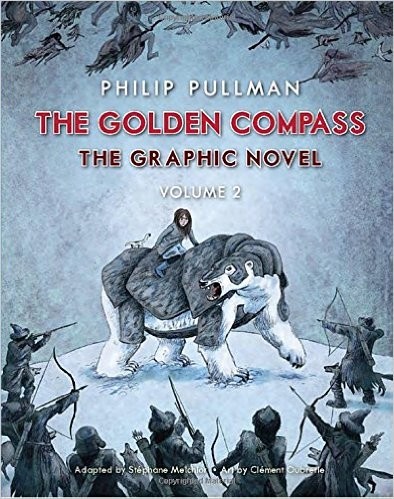
In a world where every person's soul walks beside them as a shape-shifting animal companion, a fierce orphan named Lyra overhears a secret about a mysterious substance called Dust, and stumbles into a conspiracy involving stolen children, armored bears, and the highest powers of her world.
Pullman's fantasy (published as Northern Lights in the UK) follows Lyra north to rescue kidnapped children and uncover what the sinister Church-backed Magisterium is doing to them in the name of Dust. Armed with a truth-telling instrument, the alethiometer, she is drawn into a cosmic conflict about innocence, free will, and knowledge, launching a trilogy that boldly questions authority and dogma.
Published in 1995 as the first volume of His Dark Materials, its author Philip Pullman conceived the trilogy partly as a humanist response to Milton's Paradise Lost and a counter to Lewis's Narnia. It won the 1995 Carnegie Medal and, in 2007, the 'Carnegie of Carnegies' as the best winner of the award's first seventy years.
- 01
Daemons
Every human's soul as an external animal that settles into fixed form at adulthood is a brilliant device for exploring identity and innocence.
- 02
Dust
The mysterious particle the Magisterium fears becomes the trilogy's central mystery, linked to consciousness and sin.
- 03
The alethiometer
Lyra's golden truth-telling instrument grounds her power in intuition and interpretation, not force.
- 04
Iorek Byrnison
The exiled armored bear Lyra befriends embodies honor, and the north's harsh grandeur.
The revelation of what the Gobblers are doing at Bolvangar, severing children from their daemons in a process called intercision, is the novel's horrifying moral core.
Iorek Byrnison's duel with the usurper bear-king Iofur Raknison, won by cunning as much as strength, is a thrilling set-piece of loyalty and pride.