The Little Prince
One sees clearly only with the heart. What is essential is invisible to the eye.
Why read it
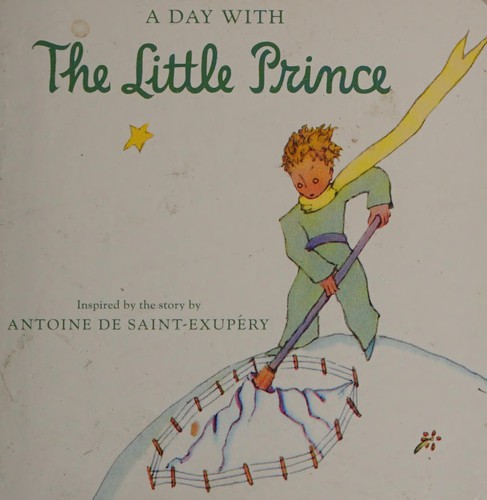
A pilot crashes in the Sahara and meets a small golden-haired boy who has fallen from an asteroid, loves a vain rose, and asks questions no adult can answer. The most translated novel ever written — and a children's book mostly bought by adults.
The Little Prince has visited six planets, each ruled by a grown-up devoted to something absurd — a king with no subjects, a businessman counting stars he 'owns,' a lamplighter obeying pointless orders. On Earth, a fox teaches him the book's secret: you become responsible, forever, for what you have tamed. Saint-Exupéry's fable is about how adults forget what matters — and what loving something fragile costs.
Saint-Exupéry was a pioneering airmail pilot who had actually crashed in the Sahara and nearly died of thirst. He wrote the book in wartime New York exile in 1942, homesick for occupied France; the rose is widely read as his tempestuous wife Consuelo. A year after publication he vanished flying a reconnaissance mission over the Mediterranean — no body ever found, like his prince.
- 01
The drawing test
The narrator's childhood drawing of a boa digesting an elephant — which every adult sees as a hat — opens the book with its thesis: grown-ups need everything explained, and explanation kills it.
- 02
Six planets of grown-ups
The king, the vain man, the drinker, the businessman, the lamplighter, the geographer — a satire of every adult occupation, gentle enough for children and lethal for the rest of us.
- 03
The fox's secret
'One sees clearly only with the heart. What is essential is invisible to the eye.' Taming, waiting, wheat-colored hair — the book's theory of love in five pages.
- 04
The rose problem
The prince left his rose because she was vain and demanding; the whole journey teaches him that her being one of thousands changes nothing — she is his rose. Anyone who has loved a difficult person understands.
The fox begs to be tamed and explains the ritual: sit a little closer every day, come at the same hour, so that happiness has time to begin before it arrives — anticipation as the shape of love.
The ending — the snake, the falling star, the body too heavy to take home — is handled so gently that children read an adventure and adults read a death, and both are right.