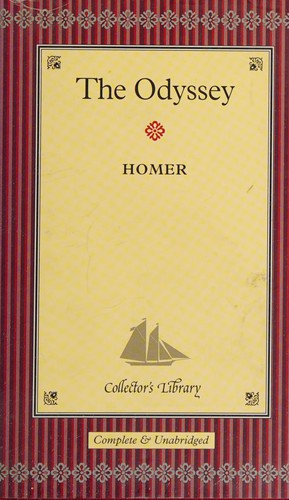
The Odyssey
by Homer
Sing to me of the man, Muse, the man of twists and turns.
Why read it
The Trojan War is over, but for one clever king the hardest journey is only beginning: ten more years of storms, monsters, witches, and the sea's endless grudge stand between Odysseus and his own front door. It is the original story of the long way home.
Homer's epic braids two quests: Odysseus fighting his way back to Ithaca, and his son Telemachus growing up in search of the father he barely remembers, while a house full of suitors devours their kingdom. Beneath the adventures it is a poem about cunning over strength, loyalty, hospitality, and the human ache to return to the place and people that make you who you are.
Composed in ancient Greek around the 8th century BCE and rooted in a long oral tradition of sung poetry, it is attributed to Homer, about whom almost nothing certain is known. For nearly three thousand years it has been continuously read and retranslated; Emily Wilson's 2017 version was the first published English translation by a woman.
- 01
Nostos, the homecoming
The Greek longing for return gives the poem its spine; every trial is measured against Ithaca.
- 02
Cunning intelligence
Odysseus is defined by metis, the crafty wits that let him outthink Cyclopes and gods alike.
- 03
Xenia, guest-friendship
How hosts treat strangers is the poem's ethical test, and the suitors fail it catastrophically.
- 04
Penelope's cunning
The wife weaving and unweaving her shroud to delay the suitors is Odysseus's equal in patient guile.
Trapped in the Cyclops's cave, Odysseus blinds Polyphemus and escapes clinging to the bellies of sheep, having told the giant his name is 'Nobody.'
The disguised Odysseus stringing the great bow no suitor could bend, then turning it on the men who plundered his home, is the epic's explosive climax.