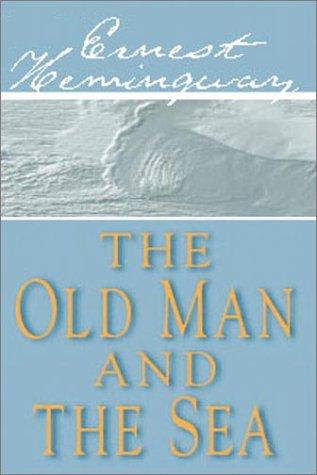
The Old Man and the Sea
A man can be destroyed but not defeated.
Why read it
Eighty-four days without a fish. On the eighty-fifth, Santiago rows out farther than the other boats and hooks the marlin of his life — a fish longer than his skiff, which tows him out to sea for two days while he holds the line with cramping, bleeding hands. It won him the Pulitzer, then the Nobel. It's 127 pages.
An old Cuban fisherman, mocked as unlucky, battles a great marlin alone on the Gulf Stream — then battles the sharks that come for his prize, and rows home with what's left. Hemingway strips the novel to its studs: one man, one fish, the sea, and the discipline of doing a thing right when no one is watching. 'A man can be destroyed but not defeated' is the thesis; the book is the proof.
By 1951 Hemingway hadn't published a major novel in a decade and critics had written him off after Across the River. He wrote this in eight weeks in Cuba, based on a tale he'd heard in the 1930s, and Life magazine printed it complete — selling 5.3 million copies in two days. Pulitzer 1953; Nobel 1954, with the committee citing it directly. It was the last major work published in his lifetime.
- 01
The iceberg at its purest
Hemingway's theory — show an eighth, let the rest work underwater — has never been executed more completely; the book reads simple and refuses to stay that way.
- 02
Worthy opponents
Santiago calls the marlin his brother, loves him, and kills him anyway — a hunter's ethics with no irony and no apology, and the book's moral center.
- 03
The boy, Manolin
Forbidden to fish with the 'unlucky' old man, he feeds him, argues baseball, and weeps at the end — the frame of love that keeps the ordeal from being nihilism.
- 04
Victory as remainder
The sharks take everything but the skeleton; the tourists mistake it for a shark. What's left — the story itself, the boy's renewed loyalty — is Hemingway's definition of winning.
Santiago, hands shredded, talks himself through the night: he recites what he'd do if the boy were there, argues with his own left hand for cramping, and apologizes to the fish for going out too far.
He dreams, as always, of lions playing on an African beach he saw as a boy — the image that opens and closes the book, standing for everything strength was before it became endurance.