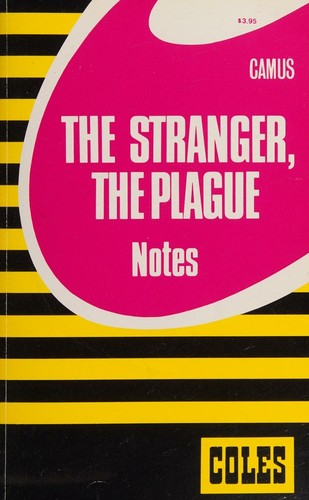
The Stranger
by Albert Camus
Maman died today. Or yesterday maybe, I don't know.
Why read it
Meursault does not cry at his mother's funeral, and later, on a blinding beach, he shoots a man for reasons he can barely explain. His real crime, the court decides, is that he refuses to pretend to feel what he does not feel.
Camus's spare novel is the fictional heart of his philosophy of the absurd: a portrait of a man who lives without illusion in a universe that offers no meaning. As Meursault faces judgment, the book asks whether honesty about life's indifference is a form of freedom or a death sentence.
Albert Camus published L'Etranger in occupied France in 1942, when he was in his late twenties. It became one of the most-read French novels of the twentieth century and a cornerstone of his 1957 Nobel Prize in Literature. Matthew Ward's 1988 English translation restored the flat, American-inflected voice Camus intended.
- 01
The philosophy of the absurd
You gain the clearest possible feel for Camus's idea that meaning is not given, only made, or refused.
- 02
Judged for feeling wrong
Meursault is condemned less for the killing than for his emotional honesty, exposing how society punishes those who won't perform grief.
- 03
The tyranny of the sun
Physical sensation, not motive, drives the crucial act, and what awaits is a radical view of human behavior stripped of tidy explanation.
- 04
Freedom in the face of death
In his cell, Meursault reaches a strange peace that reframes the whole book as an argument for living without false hope.
The killing on the beach, where heat, light, and sweat blur into the pull of the trigger and four more shots into a body already still.
The prison chaplain's visit, when Meursault finally erupts, rejecting religious consolation and embracing the indifference of the world.