
Miles Ovadia★ Curator · Lv 5
todayEvery time you think it can't escalate, it escalates. And it's all true.
Dignity is as essential to human life as water, food, and oxygen.
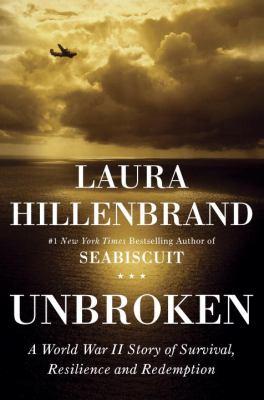
Louie Zamperini ran the Berlin Olympics at nineteen, crashed into the Pacific at twenty-six, survived 47 days on a shark-circled raft — and then his war got worse: two years in Japanese POW camps under a guard whose mission was breaking him. Hillenbrand's book about resilience sold four million copies because every unbelievable chapter is footnoted true.
Hillenbrand structures it as escalation: delinquent to Olympian (the discipline that saves him), airman to castaway (the raft chapters are the survival-writing standard), prisoner to target — the Bird, a sadistic corporal, makes Louie's fame his obsession. Then the war ends and the book keeps going: the nightmares, the whiskey, the plan to murder the Bird — and the 1949 Billy Graham tent meeting that turned vengeance into the book's final, hardest chapter: Louie returning to Japan to forgive his guards, face to face.
Hillenbrand — housebound for decades with severe chronic fatigue syndrome — reported the book almost entirely by phone and mail over seven years, interviewing Louie 75 times without ever being able to travel to him; she has called writing about motion from a still room the engine of her books. Published 2010: four years on the NYT list, 14 million copies across editions, and the Jolie film in 2014. Louie died at 97, six months before its release.
Catching albatrosses barehanded, out-psyching sharks, drifting 2,000 miles — the middle section is a masterclass in agency: the men who survived kept making decisions.
Mutsuhiro Watanabe, war criminal #23 on MacArthur's list — Hillenbrand's portrait of intimate, personal sadism gives the book its antagonist and its forgiveness its price tag.
The book's running thesis: the Bird's target was Louie's selfhood, and resistance was internal — the stolen newspaper, the secret diary, the refusal to broadcast propaganda.
Flashbacks, alcohol, a plan to kill — Hillenbrand refuses the finish line at V-J Day; the redemption arc is longer and stranger than the survival one.
Day 27 on the raft: a Japanese bomber strafes them repeatedly while Louie, the only one with strength to move, dives among the sharks and punches them away from the raft — the single most quoted sequence in modern survival writing.
Louie holding the beam: ordered to lift a heavy wooden plank overhead as punishment, expected to collapse — he holds it 37 minutes, eyes on the Bird, until the guard beats him down in fury. Defiance with nothing left but posture.
Every time you think it can't escalate, it escalates. And it's all true.