Miles Ovadia★ Curator · Lv 5
todayKilled my sleep schedule and my trust in authors sparing anyone.
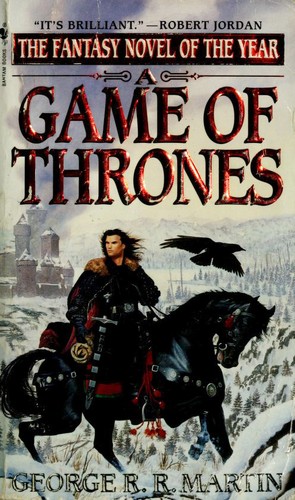
When you play the game of thrones, you win or you die. There is no middle ground.
The king rides north to ask his oldest friend to be his right hand; the friend's son finds direwolf pups in the summer snow; and a boy climbs a tower and sees something that gets him thrown from the window. Martin's opening moves look like classic fantasy — then the book starts executing the people fantasy is supposed to protect.
Westeros runs on the gap between the songs and the game: honor is real, and it is also a weapon your enemies hand you. Ned Stark — the genre's standard-issue noble hero — walks into the capital carrying rules the capital doesn't use, while across the sea an exiled girl is sold to a horselord and begins, slowly, to become the story's fire. Martin's revolution was consequence: POV chapters from eight heads, politics with actual arithmetic, and the reader's protection revoked on page one of the ninth book they'd normally be safe in.
Martin — Hugo-winning SF writer burned out on Hollywood, where his scripts were always 'too big' — began in 1991 with an image that wouldn't leave: a boy witnessing a beheading, and direwolf pups in the snow. Published 1996 to modest sales, it compounded by word of mouth into the defining fantasy of its era; the HBO adaptation (2011) made it a global commons. The saga stands at five of a promised seven volumes, a wait that has become its own folklore.
Ned's every decent act — warning Cersei, refusing preemptive murder — is converted into a move against him. The book's thesis: in the game of thrones, virtue unarmored is a resource for others.
No narrator sees the board; Sansa's fairy tale, Ned's investigation, and Tyrion's jokes are all partial data. Martin builds suspense from the reader knowing barely more than anyone.
While lords play succession, the true threat gathers off-page north of a 700-foot wall manned by convicts — epic stakes managed as background radiation, patience as world-building.
From sold sister to khaleesi to the pyre — the book's single greatest transformation, ending in the image (three dragons at her breast) that reignited modern fantasy.
Bran climbs, sees the queen with her brother, and Jaime shoves him from the window with 'The things I do for love' — the moment, thirty pages in, when the reader learns this book's rules are different.
Ned on the steps of Baelor's sept: confession extracted, deal made, mercy promised — and the boy-king sends for the headsman anyway, with Ned's own sword. The genre's safety glass, shattered in one paragraph.
Killed my sleep schedule and my trust in authors sparing anyone.