A Random Walk Down Wall Street
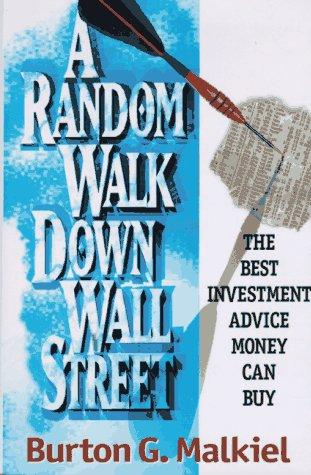
A blindfolded monkey throwing darts at a newspaper's financial pages could select a portfolio that would do just as well as one carefully selected by the experts.
Why read it
A blindfolded monkey throwing darts at the stock listings can pick a portfolio as good as the experts, and an economist spent decades explaining why, and what that means for the ordinary person trying to invest.
Burton Malkiel argues that markets are efficient enough that stock prices move essentially at random, so no one can reliably beat the market over time, and most active management is a costly illusion. His prescription is broad diversification through low-cost index funds. It is the classic case for passive investing, updated across many editions.
Burton G. Malkiel, a Princeton economist, first published A Random Walk Down Wall Street in 1973. Continuously revised across many editions over 50 years, it sold well over a million copies and became one of the most influential books in personal finance, helping popularize index investing.
- 01
Prices move at random
The core takeaway is that past price movements do not reliably predict future ones.
- 02
You cannot beat the market
Over time, most active managers underperform simple index funds after fees.
- 03
Costs are the enemy
Fees and trading quietly erode returns, so minimizing them is a rare sure thing.
- 04
Bubbles repeat
History shows the same speculative manias recurring in new costumes.
The recurring history of speculative bubbles, from seventeenth-century Dutch tulip mania to the South Sea Bubble to the dot-com crash, as evidence of how crowds misprice assets.
The famous dartboard thought experiment, later echoed by real contests, showing randomly chosen stocks competing with expert picks.