Miles Ovadia★ Curator · Lv 5
todayDry in stretches, but chapters 8 and 20 are the entire game.
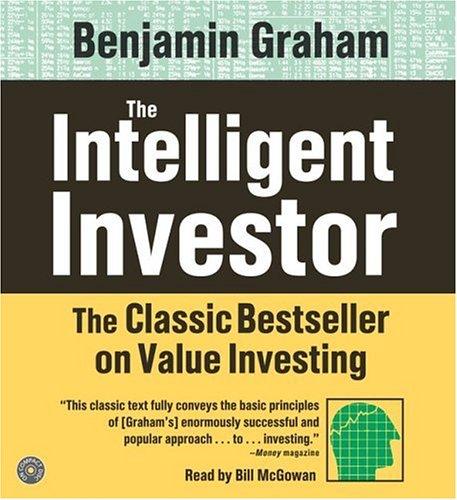
The investor's chief problem — and even his worst enemy — is likely to be himself.
Warren Buffett calls it 'by far the best book on investing ever written' — he read it at nineteen, sought out its author, and named his son after him. Graham's 1949 classic has outlived every hot strategy since by teaching one discipline: the market is there to serve you, not instruct you.
Investment is an operation that, on thorough analysis, promises safety of principal and adequate return — everything else is speculation, whatever it calls itself. Graham's two immortal inventions carry the book: Mr. Market, your manic business partner who quotes you a different price daily and whom you're free to ignore; and the margin of safety, buying so far below conservative value that being wrong still leaves you whole. The enemy is never the market. It's the investor in the mirror.
Graham lost most of his clients' money (and his own) in 1929–32, rebuilt it, and codified the lessons — first in the professional tome Security Analysis (1934), then this 1949 version for laypeople. He taught at Columbia, where Buffett took his class, worked for him, and later wrote the standard edition's preface and appendix. The modern printing pairs Graham's chapters with Jason Zweig's commentary tying each to the dot-com era's fresh corpses.
The most useful metaphor in finance: a partner who offers to buy or sell daily at moody prices. His quotes are options, not information — the entire behavioral revolution in one parable from 1949.
The three words Graham said summarize sound investing: pay so much less than value that error, bad luck, and time are all survivable. Chapter 20 is the book's cathedral.
Graham's honest fork: most people should automate (broad diversification, steady buying — index logic before index funds); the few who'll work like analysts may hunt bargains. Choosing your lane IS the strategy.
A stock is a fractional business, not a ticker symbol — the reframe that turns volatility from threat into the source of every opportunity.
Graham's market history chapters walk through mania after mania — 1929, the Nifty Fifty's ancestors — showing the same emotional cycle wearing each era's costume; Zweig's commentary then overlays 1999's Pets.com to complete the induction.
The famous conclusion: 'The investor's chief problem — and even his worst enemy — is likely to be himself.' Behavioral finance, stated plainly, fifty years before the Nobel committee got around to it.
Dry in stretches, but chapters 8 and 20 are the entire game.