Dana Reyes★ Contributor · Lv 4
todaySimplistic in places, but the asset/liability reframe genuinely rewired how I think about salary.
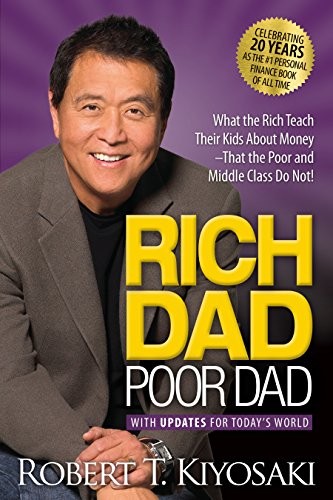
The rich don't work for money. They make money work for them.
Two fathers: a PhD who worked hard, climbed the ladder, and died with bills — and an eighth-grade dropout who built an empire. Kiyosaki's parable of what the second taught him became the best-selling personal finance book in history: 40 million copies built on one sentence — the rich don't work for money.
Financial literacy isn't taught in schools, so most people spend their lives in the 'rat race': earn, spend, borrow, repeat. Kiyosaki's core distinction is brutal and useful — an asset puts money in your pocket, a liability takes it out, and the middle class stays stuck by buying liabilities (the house, the car) they believe are assets. Escape means building or buying income-producing assets until they pay for your life.
Kiyosaki self-published in 1997 after publishers passed; it spread through network-marketing circles, hit the bestseller lists by 2000, and never really left. The 'rich dad' himself is likely a composite — Kiyosaki has been cagey for decades — and critics note the book is long on parable, short on verifiable specifics. Its defenders' answer: the asset/liability reframe alone has rewired more households than any textbook.
The book's one indispensable idea: cash flow direction defines the category, and your house — the classic 'biggest investment' — usually flows the wrong way.
Buy assets before paying expenses, and let the pressure of bills force your hustle — deliberately inverted from every prudent budgeting book, and stickier for it.
Kiyosaki's case for choosing jobs by skills acquired (sales, marketing, systems) over salary — the chapter most useful to people early in a career.
How the rich structure income so taxes hit last instead of first — simplified to the edge of caricature, but the introduction to the concept most readers ever get.
Nine-year-old Kiyosaki and his friend Mike literally mint counterfeit nickels from toothpaste tubes — and rich dad, instead of scolding, hires them at 10 cents an hour precisely so they'll feel wage work's dead end and revolt against it.
Rich dad's tollbooth lesson: wealth is when your asset column pays your expenses without you showing up — measured not in dollars but in days you could survive without working.
Simplistic in places, but the asset/liability reframe genuinely rewired how I think about salary.