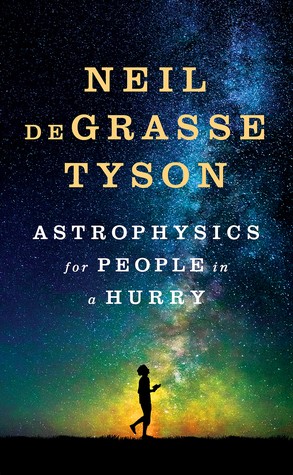
Astrophysics for People in a Hurry
We are stardust brought to life, then empowered by the universe to figure itself out—and we have only just begun.
Why read it
You don't have years to master the cosmos, but you have a few spare minutes here and there. Neil deGrasse Tyson distills the biggest questions in the universe, from the Big Bang to dark matter, into bite-size chapters for the time-starved.
Tyson offers a brisk, witty tour of modern astrophysics, covering the origin of the universe, the forces that govern it, and our small place within it. The book's aim is not just to inform but to instill a cosmic perspective, a humbling sense of connection to a vast and ancient universe.
Neil deGrasse Tyson, director of the Hayden Planetarium, gathered essays first written for Natural History magazine into this 2017 book. It became a runaway bestseller, spending nearly a year on the New York Times list and introducing millions of casual readers to modern cosmology.
- 01
The first moments
You gain an accessible account of the Big Bang and the universe's earliest seconds, when its basic laws were set.
- 02
Dark matter and dark energy
Tyson explains why most of the universe is made of things we cannot see or fully understand, honestly flagging the mysteries.
- 03
We are stardust
A central takeaway is that the atoms in your body were forged in stars, physically linking you to the cosmos.
- 04
The cosmic perspective
The closing argument is that seeing yourself against the scale of the universe is humbling and, Tyson argues, ennobling.
Tyson's explanation of how elements heavier than hydrogen and helium were cooked inside stars and scattered by supernovae to form planets and people.
His account of the discovery of the cosmic microwave background, the faint afterglow of the Big Bang detected as noise by two puzzled engineers.