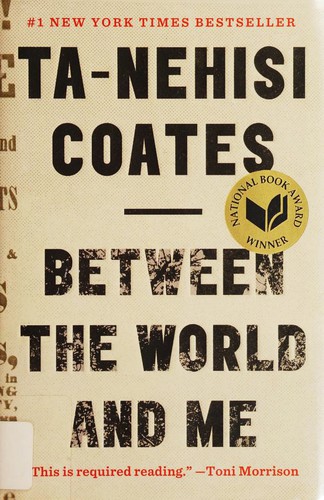
Between the World and Me
But race is the child of racism, not the father.
Why read it
Written as a letter to his teenage son, Ta-Nehisi Coates tries to explain what it means to inhabit a black body in America, where that body has never been fully safe. He offers no false comfort, only hard-earned truth.
Coates frames American racism as a physical fact, a matter of bodies that can be destroyed, and traces how that reality shaped his own life from Baltimore streets to Howard University. The book is a meditation on history, fear, and the myth of the American Dream built atop black vulnerability.
Ta-Nehisi Coates published Between the World and Me in 2015; it won the National Book Award for Nonfiction and was a finalist for the Pulitzer Prize. Modeled partly on Baldwin's The Fire Next Time, it became a defining text of its moment and a fixture on bestseller and syllabus lists alike.
- 01
Racism as bodily
You gain Coates's insistence that racism is felt in the body, in physical danger, not merely in ideas or attitudes.
- 02
The Dream as illusion
He dissects the American Dream as a comfortable myth sustained by the plunder of black lives.
- 03
History without redemption
The book refuses easy uplift, and what you take away is a demand to face the past without the anesthesia of hope.
- 04
A father's inheritance
Addressed to his son, it becomes a meditation on what knowledge a parent can and cannot pass down for protection.
Coates's account of the police killing of his Howard classmate Prince Jones, the loss that anchors the book's grief and rage.
His memories of navigating the coded violence of the Baltimore streets, learning that his body was always at risk.