Miles Ovadia★ Curator · Lv 5
todayGenuinely made me more optimistic, and better at reading a chart.
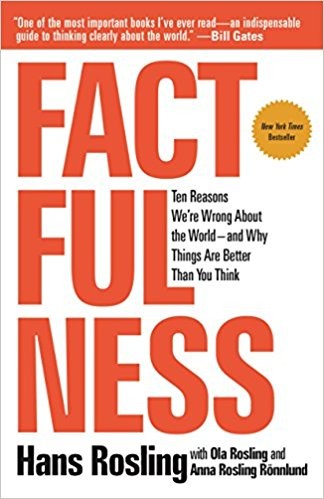
by Hans Rosling
The world cannot be understood without numbers. But the world cannot be understood with numbers alone.
Ask people simple questions about the state of the world, poverty, child mortality, education, and they score worse than random chance. We are not just ignorant, Hans Rosling shows; we are systematically wrong, and always in the gloomy direction.
Rosling identifies ten instincts that distort our thinking and make us believe the world is worse than it is, then offers tools to correct them with data. The result is a hopeful, evidence-based case that the world has improved dramatically, and a method for thinking more clearly about it.
Hans Rosling, the Swedish physician and global-health statistician famous for his TED talks, wrote Factfulness with his son Ola Rosling and daughter-in-law Anna Rosling Ronnlund. Published in 2018 shortly after his death, it became an international bestseller praised by Bill Gates, who gave copies to U.S. college graduates.
You gain a checklist of dramatic instincts, from the Gap Instinct to the Fear Instinct, that reliably skew our view of reality.
The central takeaway is that by most measures humanity has progressed enormously, a fact most people get wrong.
Rosling replaces the outdated us-versus-them, developed-versus-developing split with a more accurate four-level model.
The book's method is to pause, ask for data, and beware of the single dramatic story, a practice for lifelong clearer thinking.
The opening quiz of thirteen questions on global trends, on which audiences of experts and executives consistently score worse than chimpanzees choosing at random.
Rosling's story of a life-threatening medical misjudgment early in his career, illustrating how urgency and fear distort decisions.
Genuinely made me more optimistic, and better at reading a chart.