
Dana Reyes★ Contributor · Lv 4
todayI read it in one sitting with my stomach in knots. Krakauer's honesty about his own role guts you.
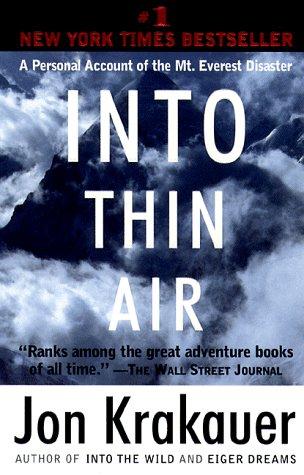
by Jon Krakauer
Everest has always been a magnet for kooks, publicity seekers, hopeless romantics, and others with a shaky hold on reality.
A journalist reaches the summit of Everest and then watches a sudden storm turn the descent into a fight for survival that will kill some of the people who climbed beside him.
Krakauer's firsthand account of the 1996 Everest disaster reconstructs how a commercial expedition unraveled near the top of the world. It is both a gripping survival narrative and a hard examination of ambition, commercialization, and the fatal decisions made where the air is too thin to think.
Krakauer was on assignment for Outside magazine when the disaster struck; he expanded his article into the 1997 book, which became a massive bestseller. It drew both acclaim and controversy, including disputes with survivor Anatoli Boukreev over accounts of that day.
Paying clients with limited experience reveal the dangers of guiding the mountain for money.
Oxygen starvation and exhaustion corrode the judgment climbers most need near the summit.
Ignored deadlines for turning back become a central, fatal failure of the expedition.
Krakauer interrogates his own actions and memory rather than absolving himself.
Guide Rob Hall, stranded near the summit and unable to descend, speaks by radio to his pregnant wife in New Zealand before he dies.
Climber Beck Weathers, left for dead in the storm, revives and staggers back into camp, blinded and frostbitten, in a scene no one expected.
I read it in one sitting with my stomach in knots. Krakauer's honesty about his own role guts you.