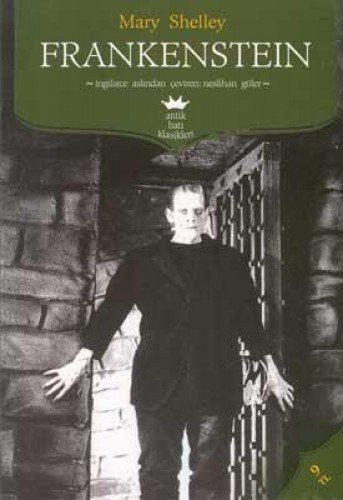
Frankenstein
by Mary Shelley
Beware; for I am fearless, and therefore powerful.
Why read it
A young scientist discovers the spark of life, assembles a creature from the dead, and flees the room the moment it opens its eyes. The abandoned creation teaches itself language, reads Paradise Lost, and comes looking for its maker — with a demand. An eighteen-year-old invented science fiction, and no one has improved on its question since.
Victor Frankenstein's sin isn't creation — it's desertion. Shelley structures the novel as nested confessions (an Arctic explorer, Victor, the creature itself at the center) so that the 'monster' gets literature's most devastating counter-testimony: born benevolent, educated by eavesdropping on a poor family, met with screams at every approach, and made murderous by loneliness. The book's living question — what does a creator owe the created? — has only grown teeth as its descendants moved from laboratories to code.
Ghost-story contest, Lake Geneva, the volcanic 'year without a summer' of 1816: Byron proposed each guest write a tale, and eighteen-year-old Mary Godwin — traveling scandalously with the married Shelley, already bereaved of an infant daughter — dreamed the 'pale student of unhallowed arts' kneeling beside his creature. Published anonymously in 1818, it was assumed to be her husband's; her authorship, like her heroine-less novel, took a century to be read properly.
- 01
The creature's education
The central chapters — language learned through a cottage wall, Plutarch and Milton read in a hovel — are the book's masterstroke: the 'monster' is the most articulate character in it.
- 02
Abandonment as the crime
Victor's flight from the workshop, not the workshop itself, sets every death in motion — Shelley's precise relocation of sin from making to unfathering.
- 03
The demand for a mate
The creature's request — one companion, then permanent exile — and Victor's midnight destruction of the half-built bride is the novel's ethical hinge: which refusal was the greater cruelty?
- 04
Birth, not lightning
Written by a teenager who had borne and buried a child, the novel vibrates with creation anxiety the films replaced with electrodes — the 'workshop of filthy creation' is a labor scene.
The creature's first sight of himself in a pool — 'I was in reality the monster that I am' — and his later plea: 'I was benevolent and good; misery made me a fiend. Make me happy, and I shall again be virtuous.' The whole book in two sentences.
William's murder and the framing of Justine — the creature's first act of deliberate evil, choosing Victor's family, followed by Victor's silence at her trial. The creator lets an innocent hang rather than confess; Shelley keeps the ledger honestly.