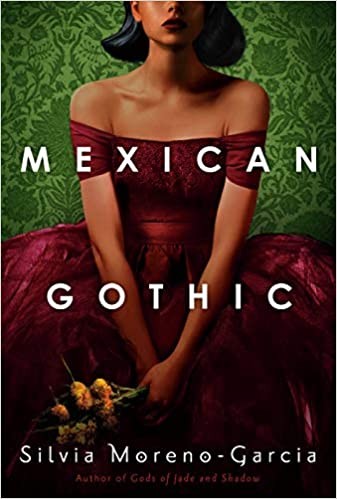
Mexican Gothic
The parties at the Tunons' house always ended unquestionably late.
Why read it
A glamorous 1950s Mexico City socialite receives a frantic letter from her newlywed cousin, claiming her husband is poisoning her and the walls of his house are speaking, and travels to a decaying mansion in the mountains to bring her home.
Noemi Taboada arrives at High Place, the moldering estate of the English Doyle family, to find her cousin drugged and the household ruled by a patriarch obsessed with bloodlines and eugenics. As Noemi's own dreams grow violent and the house seems to breathe, she uncovers a horror rooted in colonialism, decay, and a hunger that outlives generations. It is gothic dread reengineered for a Mexican setting and a modern reckoning with race and power.
Silvia Moreno-Garcia, a Mexican-Canadian author, published Mexican Gothic in 2020. It won the Locus Award for Best Horror Novel and was a New York Times bestseller, cementing her reputation for genre-hopping fiction.
- 01
The house as villain
What awaits is a mansion that is not merely haunted but alive, feeding on its inhabitants.
- 02
Rot beneath beauty
The Doyle family's faded English gentility masks a colonial parasitism that the novel makes literal.
- 03
A modern gothic heroine
Noemi weaponizes cigarettes, charm, and defiance where older heroines only fainted.
- 04
Dreams that bleed in
The line between nightmare and the waking house dissolves, and so does Noemi's safety.
Noemi's nightmares in which the golden mold on the walls glows and Howard Doyle appears, dreams that begin to leak into her waking hours.
The revelation of the fungus threaded through the house and the family, the true source of the Doyles' unnatural longevity.