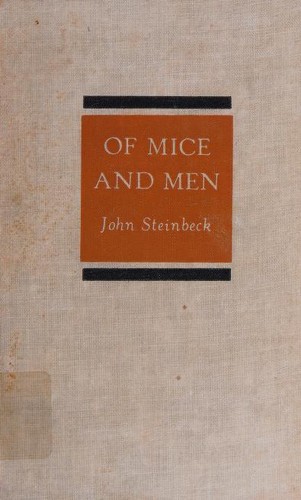
Of Mice and Men
A guy needs somebody to be near him. A guy goes nuts if he ain't got nobody.
Why read it
Two migrant workers cross Depression-era California chasing a shared dream of a little farm of their own. One is quick and small, the other a giant with a gentle heart and a dangerous strength he cannot control.
Of Mice and Men follows George and Lennie as they cling to friendship and a fragile dream against the loneliness of itinerant labor. Steinbeck compresses the human need for companionship and hope into a tight, tragic parable about how the vulnerable are ground down. Its power lies in how much it says in so few pages.
John Steinbeck published Of Mice and Men in 1937, drawing on his own years as a ranch hand in California. He conceived it as a novel that could be performed as a play with almost no changes, and its stage version won a Drama Critics' Circle Award the same year. The title comes from a Robert Burns poem about the best-laid plans going awry.
- 01
The dream of belonging
The little farm George and Lennie describe is really a dream of security and home in a rootless world.
- 02
Loneliness on the ranch
Nearly every character confesses a deep isolation that the migrant life enforces.
- 03
Strength and vulnerability
Lennie embodies how innocence and power together can become tragically dangerous.
- 04
Mercy and its price
The ending forces a wrenching question about what love sometimes demands.
George telling Lennie for the hundredth time about the farm they will have, with rabbits for Lennie to tend, a ritual that soothes them both.
The shooting of Candy's old dog, which foreshadows the novel's close and shows mercy and cruelty as uncomfortably close.