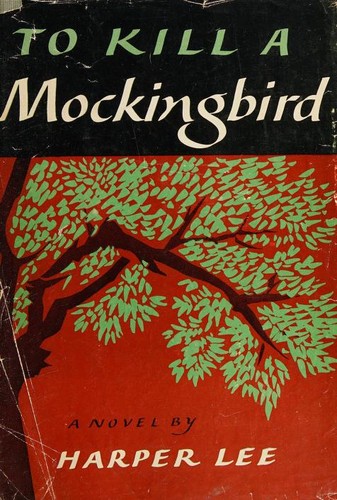
To Kill a Mockingbird
by Harper Lee
You never really understand a person until you consider things from his point of view… until you climb into his skin and walk around in it.
Why read it
Scout Finch is six when her father — a small-town Alabama lawyer — takes the case no one wants: defending a Black man falsely accused by a white woman. Through a child's eyes, one summer at a time, Lee builds the American novel about conscience: what it costs, and why you do it anyway when losing is certain.
The trial of Tom Robinson is the spine, but the novel's real subject is moral education — how children learn justice by watching adults choose it or dodge it. Atticus's instruction to climb into another person's skin and walk around in it, the slow revelation of Boo Radley, and the verdict everyone sees coming make one argument: courage is doing right when the outcome is already lost.
Lee spent years reworking the manuscript (an editor famously turned drafts of flashbacks into the sustained childhood narrative) and published it in 1960, on the eve of the civil-rights decade. Pulitzer Prize, forty million copies, and one of the most beloved film adaptations ever made — and Lee, wary of the spotlight, never published another novel in her lifetime except the controversial early draft released as Go Set a Watchman.
- 01
Walk around in their skin
Atticus's empathy rule structures the whole book — applied to a poor farm boy at the dinner table, a morphine-addicted neighbor, and finally Boo Radley himself.
- 02
The trial
The courtroom chapters are procedural, devastating, and clear enough that generations of lawyers cite them as why they chose the profession — and the verdict teaches Scout what the adults already knew.
- 03
Boo Radley
The children's monster-next-door subplot converges with the trial's aftermath into the book's thesis: 'it's a sin to kill a mockingbird' — harmlessness deserves protection.
- 04
Jem's broken faith
Scout narrates, but the deepest arc is her brother's — watching a twelve-year-old lose his belief that juries are fair is Lee's quiet radicalism.
The lynch mob at the jailhouse dissolves when Scout, not understanding the danger, chats innocently with a farmer about his son — a child's civility briefly restoring a man's shame.
After the verdict, the Black gallery rises in silence as Atticus passes below, and Reverend Sykes says: 'Miss Jean Louise, stand up. Your father's passin'' — the novel's most-quoted stage direction.