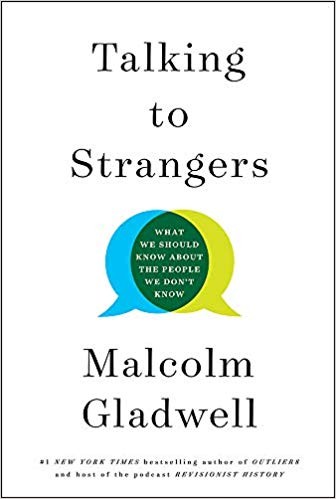
Talking to Strangers
Because we do not know how to talk to strangers, we are inviting conflict and misunderstanding in ways that have a profound effect on our lives and our world.
Why read it
A routine traffic stop in Texas ended with a young woman dead in a jail cell three days later, and Malcolm Gladwell uses that encounter to ask why we are so consistently, catastrophically bad at reading people we do not know.
Gladwell argues that our tools for judging strangers, defaulting to belief and expecting emotions to match inner states, work well enough with people we know but fail badly with those we do not. Through cases of spies, fraudsters, and misjudged criminals, he shows how these failures produce real harm. It is a book about the hidden assumptions that shape every encounter with a stranger.
Malcolm Gladwell published Talking to Strangers in 2019. A number-one bestseller, it was released with an unusual audiobook production featuring interviews and music, and became one of his most discussed and debated works.
- 01
Default to truth
The key takeaway is that we are wired to believe people, which helps society but leaves us exploitable.
- 02
The transparency myth
We assume faces reveal feelings, but demeanor and inner state often do not match.
- 03
Coupling behavior to place
Some behaviors are tied to specific contexts, so removing the context can prevent harm.
- 04
Strangers and blame
When encounters go wrong, we blame the stranger instead of our flawed tools.
The case of Sandra Bland, whose escalating traffic stop and later death frame the book's central question about reading strangers.
Neville Chamberlain meeting Hitler in person and coming away reassured, an example of how face-to-face contact can mislead rather than inform.