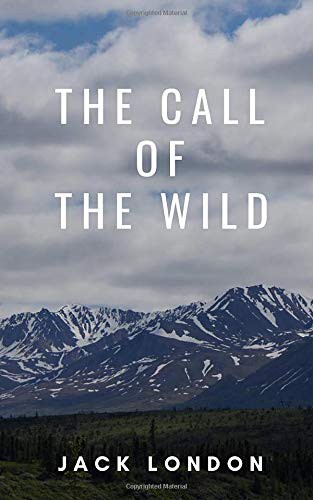
The Call of the Wild
by Jack London
There is an ecstasy that marks the summit of life, and beyond which life cannot rise.
Why read it
Stolen from a sunlit California estate and shipped north to haul sleds through the frozen Klondike, a powerful domestic dog must unlearn every comfort of civilization and answer an older, wilder voice stirring in his blood.
Buck, a pampered ranch dog, is thrust into the brutal world of the Gold Rush, where he learns the law of club and fang and rises to lead the pack. As he masters the wilderness and bonds with one last good master, the ancestral pull of the wild grows irresistible, and the novel traces his transformation from domestic animal to a creature fully returned to nature.
Jack London drew on his own year in the Yukon during the Klondike Gold Rush to write The Call of the Wild, published in 1903 after serialization in The Saturday Evening Post. An immediate sensation, it became London's most famous work and one of the best-selling and most widely translated American novels ever written.
- 01
The law of club and fang
What awaits is Buck's harsh education in a world where survival strips away every domestic softness.
- 02
The rise to lead
Buck's struggle for dominance over the sled team, and his duel with the lead dog Spitz, drives his ascent.
- 03
One last bond
His devotion to the prospector John Thornton shows the deepest tie civilization can offer before the wild claims him.
- 04
The ancestral call
A voice from the deep past pulls Buck toward the wolves, dramatizing instinct's triumph over training.
The climactic fight in which Buck defeats the vicious lead dog Spitz to take command of the team.
Buck winning Thornton's bet by breaking a thousand-pound sled loose from the ice and hauling it a hundred yards.