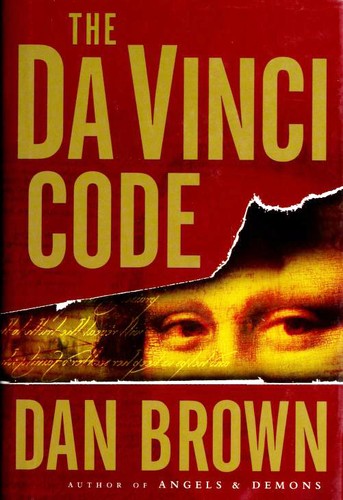
The Da Vinci Code
by Dan Brown
Everyone loves a conspiracy.
Why read it
A curator lies dead in the Louvre, arranged like Leonardo's Vitruvian Man, with a code written in his own blood. The 24 hours that follow sold 80 million copies and made the whole world argue about a painting.
Harvard 'symbologist' Robert Langdon and cryptologist Sophie Neveu follow a trail of anagrams, keystones, and art-history puzzles through Paris and London, pursued by police and a self-flagellating assassin — toward a secret society's explosive claim about Jesus, Mary Magdalene, and the Holy Grail. Brown's formula: two-page chapters, a cliffhanger every one of them, and the irresistible feeling that history's furniture hides a conspiracy.
Brown, a former English teacher whose first three thrillers sold modestly, built the novel on the (long-debunked) Priory of Sion hoax and the fringe bestseller Holy Blood, Holy Grail — whose authors sued him and lost. Published in 2003, it spent years atop every list, provoked official Church rebuttals, and dragged its predecessor Angels & Demons up the charts behind it.
- 01
The two-page chapter
Brown's real innovation is mechanical: 105 chapters, each ending mid-fall. You'll notice the trick and keep turning anyway — that's the lesson every thriller writer took.
- 02
Art as crime scene
The Mona Lisa, Madonna of the Rocks, and The Last Supper become evidence lockers; you'll never look at Leonardo's crowd scenes the same way.
- 03
The sacred feminine
The book's grand theory — that the Church suppressed goddess worship and Magdalene's true role — is terrible history and irresistible plotting; knowing the difference is half the fun.
- 04
Hide the villain in plain sight
The Teacher's identity is a fair-play misdirection that made millions of readers flip back to check the clues. Structure, again, doing the heavy lifting.
Sophie realizes the 'P.S.' in her dying grandfather's code isn't a postscript but her childhood nickname — Princesse Sophie — turning a cipher into a family wound in one beat.
The cryptex — a portable vault opened by spelling the right word, destroying itself if forced — is pure Brown: a puzzle you could hold, and the book's perfect self-portrait.