

Miles Ovadia★ Curator · Lv 5
todayReads like a thriller, all of it true. The fair and the killer in eerie counterpoint.
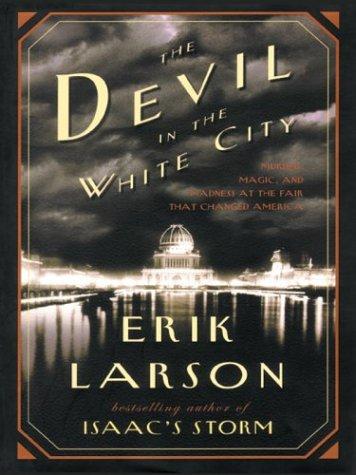
by Erik Larson
Make no little plans; they have no magic to stir men's blood.
As Chicago raced to build the dazzling 1893 World's Fair, a charming young doctor built a hotel a few miles away with soundproofed rooms, gas jets, and a kiln, and used the crowds the fair drew to make people disappear.
Erik Larson braids two true stories: architect Daniel Burnham willing the White City into existence against impossible odds, and serial killer H. H. Holmes exploiting the same moment to murder. The contrast pits human aspiration against human predation in a single glittering year. It is narrative nonfiction that reads like a thriller while staying rigorously factual.
Erik Larson published The Devil in the White City in 2003. A finalist for the National Book Award and winner of an Edgar Award, it became a long-running bestseller and a defining example of popular narrative history.
What awaits is aspiration and evil unfolding side by side in the same year.
The fair's creation is a suspense story of deadlines, weather, and will.
Holmes shows how anonymity and charm let a killer hide in a boomtown.
The book demonstrates how rigorous history can read like fiction.
The invention of the first Ferris Wheel by George Ferris, built to answer Paris's Eiffel Tower and awe the fair's millions of visitors.
Holmes's 'World's Fair Hotel,' rigged with airtight rooms, chutes, and a basement furnace, where he lured and killed guests during the fair.
Reads like a thriller, all of it true. The fair and the killer in eerie counterpoint.