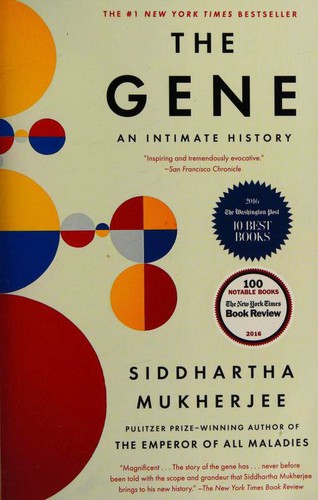
The Gene: An Intimate History
The story of the gene is the story of the search for the source and meaning of our identity.
Why read it
The idea of heredity has shaped families, medicine, and history's darkest chapters, from a monk counting peas to scientists now able to rewrite the code of life itself. Mukherjee tells this story with a personal urgency: mental illness runs in his own family.
The Gene traces the history of the gene as an idea, from Mendel and Darwin through the discovery of DNA to the modern power to edit the human genome. Siddhartha Mukherjee blends science, history, and family memoir to explore what heredity means for identity, illness, and our future. It asks how much of who we are is written in our genes, and what we should do with the power to change it.
Siddhartha Mukherjee, an oncologist, published The Gene in 2016 as a follow-up to his Pulitzer Prize-winning The Emperor of All Maladies. He frames the book with his own family's history of mental illness, giving the science a personal stake. It became a bestseller and was adapted into a documentary by Ken Burns.
- 01
Heredity as an idea
Follow how the concept of the gene evolved across a century and a half of discovery.
- 02
The shadow of eugenics
The book unflinchingly examines how genetic ideas were twisted into horror in the twentieth century.
- 03
Genes and identity
It probes how much of temperament, illness, and self is shaped by inheritance.
- 04
The power to edit life
Modern gene editing raises profound ethical questions the book insists we cannot avoid.
Gregor Mendel patiently cross-breeding tens of thousands of pea plants in a monastery garden to uncover the laws of inheritance.
The account of the misuse of genetics in the eugenics movement and Nazi Germany, a sobering warning that frames the book's ethical concerns.