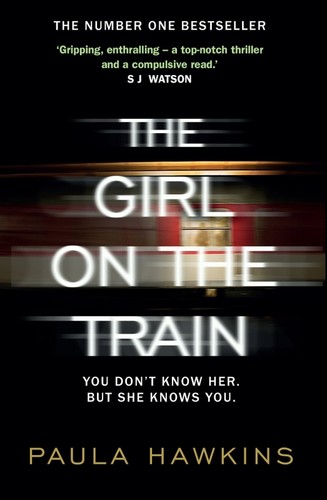
The Girl on the Train
I have lost control over everything, even the places in my head.
Why read it
Every morning a lonely, drinking commuter watches the same golden couple from the train window and invents a perfect life for them. Then the woman she has been watching vanishes, and the watcher may hold a memory of the crucial night, if only she could recall it through the blackout.
The Girl on the Train follows Rachel, an unreliable alcoholic narrator drawn into a missing-person case involving people she only thinks she knows. Paula Hawkins builds a taut psychological thriller from shifting perspectives and the unstable memories of three women. It plays on how little we truly see of other people's lives, and our own.
Paula Hawkins, a former journalist, published The Girl on the Train in 2015, and it became a runaway global bestseller, selling millions of copies and topping charts for months. It was adapted into a 2016 film starring Emily Blunt. Its success helped define the wave of domestic psychological thrillers that followed Gone Girl.
- 01
The unreliable witness
Rachel's blackouts make her doubt her own memory, and make the reader doubt every account.
- 02
Fantasy versus reality
The gap between the lives Rachel imagines and the truth drives the book's tension.
- 03
Shifting perspectives
Three women's alternating voices assemble the truth from unreliable fragments.
- 04
Domestic facades
The story exposes the dark undersides of seemingly perfect marriages and homes.
Rachel watching the couple she calls Jess and Jason from the train, building an idealized fantasy of their marriage, until she sees something that shatters it.
Rachel's fragmented attempts to reconstruct the night of the disappearance through her alcoholic blackout, piecing together shards of memory.